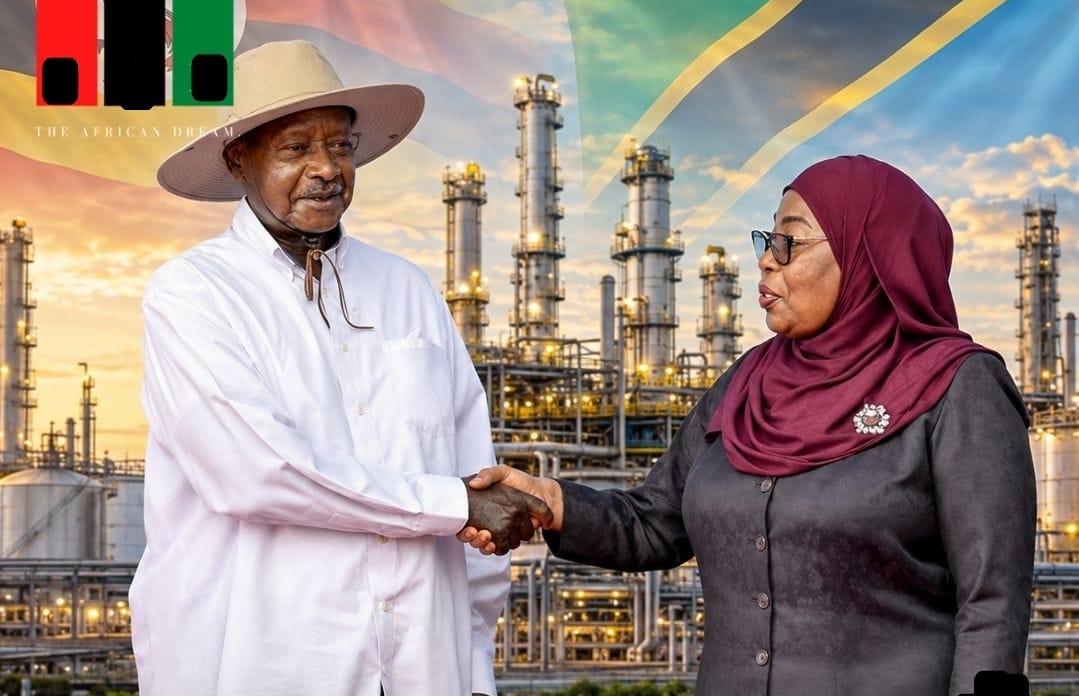
Uganda and Tanzania have signed a landmark deal with Vitol to develop a Tanga Regional Energy Hub expected to attract more than $20bn in energy investment.
Uganda and Tanzania have signed a landmark Memorandum of Understanding (MoU) with global energy trader Vitol Bahrain E.C. to develop the proposed Tanga Regional Energy Hub, a major integrated petroleum infrastructure project expected to attract more than $20 billion in investment and transform East Africa’s energy value chain.
The agreement was signed at State House in Dar es Salaam on August 6, 2026, during Ugandan President Yoweri Museveni’s working visit to Tanzania and was witnessed by Tanzanian President Samia Suluhu Hassan. The pact brings together the Uganda National Oil Company (UNOC), Tanzania Petroleum Development Corporation (TPDC) and Vitol Bahrain E.C.
Tanzania’s Minister for Energy, Deogratius Ndejembi, said the project could attract investments exceeding $20 billion and significantly increase the value derived from petroleum resources in the region.
The proposed hub will be developed around the Port of Tanga and is expected to incorporate petroleum refining, storage, logistics, trading and distribution infrastructure, alongside other cross-border energy facilities. The project builds on the existing energy partnership between Uganda and Tanzania and the infrastructure being developed under the East African Crude Oil Pipeline (EACOP).
The Tanga Regional Energy Hub is intended to move the region beyond the export of crude oil by creating additional processing and distribution capacity within East Africa.
Ndejembi described the initiative as a strategic step towards adding value to Africa’s natural resources rather than exporting raw materials.
“EACOP transports molecules. The Tanga Regional Energy Hub transforms those molecules into prosperity,” Ndejembi said.
The minister said the development would support refining, storage, petrochemicals, logistics and other industrial activities while creating skilled employment and expanding regional commerce.
Uganda’s Minister of Energy and Mineral Development, Dr Monica Musenero Masanza, said the partnership reflects Africa’s broader ambition to industrialise its natural resources and retain more value within the continent.
She said the project could contribute to the development of local engineering and technical expertise while strengthening energy security across the region.
The proposed energy hub will complement the 1,443-kilometre East African Crude Oil Pipeline, which is being developed to transport crude from Uganda’s oil-producing region around Hoima to the Chongoleani area near Tanga Port in Tanzania.
EACOP is designed to carry Uganda’s crude oil to the Tanzanian coast for export to international markets. The pipeline stretches 296 kilometres through Uganda and about 1,147 kilometres through Tanzania.
The new hub would therefore expand Tanga’s role beyond that of a crude export destination by creating infrastructure for refining, storage, petroleum trading and regional distribution.
The East African Community’s energy information platform says EACOP had reached the final stages of construction by the first quarter of 2026, with overall completion reported at 85.7 per cent.
President Samia Suluhu Hassan said the project forms part of Tanzania’s strategy to ensure that citizens benefit more from the country’s natural resources through investment, employment and stronger economic cooperation with neighbouring countries.
President Museveni similarly described the agreement as another milestone in the longstanding relationship between Uganda and Tanzania, highlighting the importance of jointly developing infrastructure capable of supporting regional integration.
The partnership also builds on existing cooperation between the two countries in developing EACOP and other petroleum infrastructure.
If fully developed, the Tanga Regional Energy Hub could strengthen fuel security and supply chains across East and Central Africa.
The proposed infrastructure could provide additional access to refined petroleum products for landlocked markets, including Rwanda, South Sudan and parts of the Democratic Republic of Congo, while creating opportunities for logistics, manufacturing and related industries.
The project’s scale could also stimulate demand for engineering, construction, transportation, hospitality and other services, potentially creating employment and expanding cross-border commerce.
For Uganda, the hub offers an additional regional platform for monetising its petroleum resources. For Tanzania, it could further consolidate Tanga’s position as a strategic energy and logistics gateway on the Indian Ocean.
The development also fits into the broader objectives of African regional integration and the African Union’s Agenda 2063, particularly its emphasis on industrialisation, regional value chains and greater intra-African trade.
The signing of the MoU, however, represents a framework for cooperation rather than the completion of the proposed project. Its eventual scale, financing, construction timetable and commercial structure will depend on subsequent feasibility, investment and implementation decisions.
With the two governments and Vitol now formally aligned around the proposed development, Tanga is emerging as a potentially significant centre for petroleum processing, storage and distribution in East Africa.
Visit GMTNewsng for more news stories.