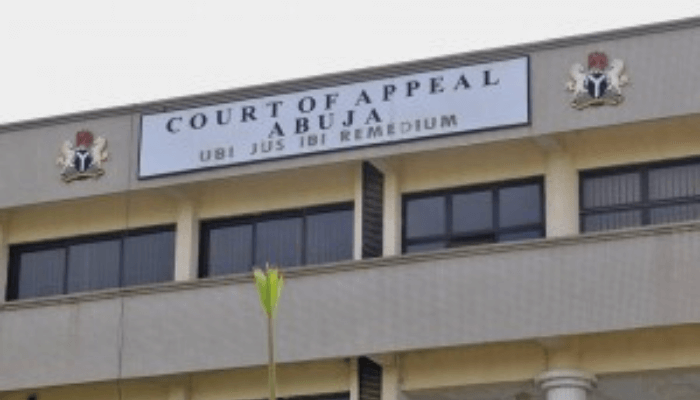
Guidelines issued by the Independent National Electoral Commission (INEC) for the 2027 general elections have been upheld after the Court of Appeal set aside a Federal High Court judgment nullifying parts of them.
The Court of Appeal in Abuja has upheld the guidelines issued by the Independent National Electoral Commission (INEC) for the conduct of the 2027 general elections, setting aside a Federal High Court judgment that nullified parts of the regulations.
In a unanimous judgment delivered on Thursday, the three-member appellate panel overturned the May 20, 2026, decision of the Federal High Court, which had restrained INEC from implementing portions of its 2027 election guidelines.
Delivering the lead judgment prepared by Justice Adebukola Banjoko, Justice Okon Abang held that the trial court erred by invalidating INEC’s administrative discretion.
“The law gives INEC powers to conduct elections in the country,” Justice Abang stated.
The Court of Appeal also ruled that the Youth Party (YP), which instituted the suit against INEC, lacked the locus standi (legal standing) to file the action.
The court held that the party failed to demonstrate that it had suffered any injury or faced any threat that prevented it from conducting its primary election.
“The respondent can only invoke the powers of the court where there are clear threats to its participation in the election.
“Where INEC acts within its powers, the courts cannot get involved. The declaratory reliefs granted by the trial court were wrongly granted and are hereby set aside,” the court held.
Justice Banjoko further stated that the Youth Party did not explain how the guidelines adversely affected either the party or its members in the nomination of candidates for the 2027 general elections.
The appellate court unanimously held that the trial judge, Justice Umar, wrongly nullified parts of the guidelines on the grounds that they violated provisions of the Electoral Act, 2026, resulting in a miscarriage of justice.
INEC had appealed the Federal High Court’s decision, arguing that the lower court erred in law by failing to determine its objection that the suit was hypothetical and academic.
The commission also contended that the proceedings amounted to a denial of fair hearing.
Lead counsel to INEC, Mr. Alex Izinyon, SAN, urged the Court of Appeal to set aside the judgment that nullified portions of the commission’s 2027 election guidelines.
The dispute arose after the Youth Party challenged INEC’s directive requiring political parties to submit their membership registers and databases by May 10, 2026, as a condition for participating in the 2027 general elections.
In its earlier judgment, the Federal High Court held that INEC could not lawfully shorten the timeline provided under Section 29(1) of the Electoral Act, 2026, for the submission of party membership records and candidates’ particulars.
Dissatisfied with that ruling, INEC filed an appeal on May 25, 2026, seeking to overturn the judgment.
The commission maintained that the trial court’s decision was against the weight of evidence and reiterated that the Youth Party lacked the legal standing to institute and maintain the suit.
With the appellate court’s decision, INEC’s 2027 election guidelines remain valid and enforceable.
Visit GMTNewsng for more news stories.