President Bola Tinubu has challenged Plateau State stakeholders to implement past security recommendations and foster a culture of tolerance, backed by a new N2 billion federal relief fund for victims.
ABUJA – In a landmark effort to quell the recurring cycles of violence in Plateau State, President Bola Ahmed Tinubu has urged the state’s leaders to return home with a renewed commitment to peace and a “spirit of tolerance.”
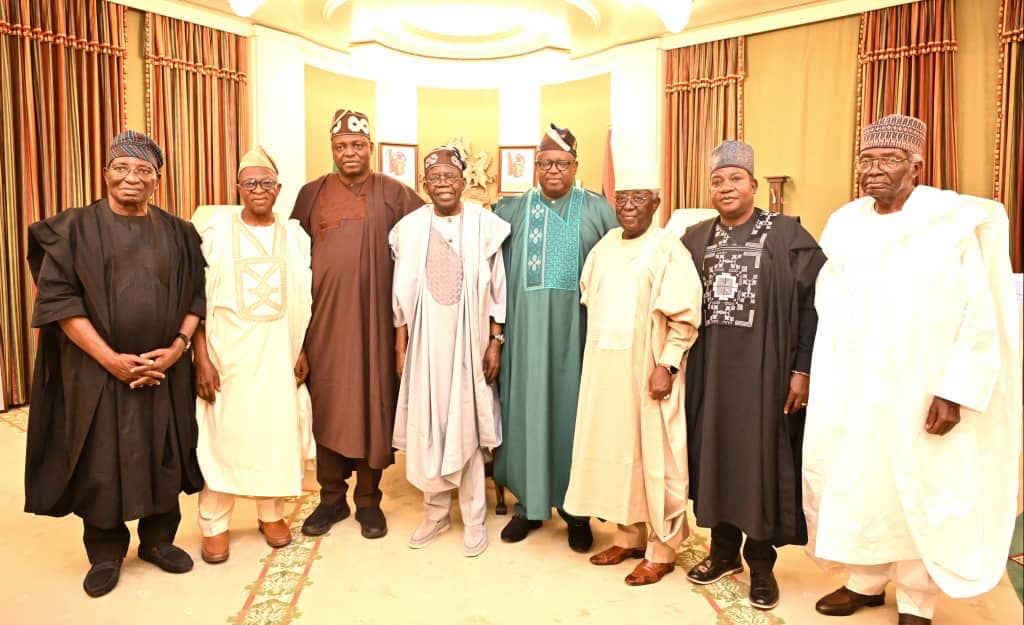
The President gave this charge during a comprehensive three-hour interactive session at the State House on Tuesday, which brought together a diverse 32-man delegation including current and former governors, traditional rulers, and youth representatives.
The meeting was a direct follow-up to the President’s promise to engage with Plateau stakeholders following the tragic violence in Angwan Rukuba, Jos North, on March 29. To support immediate recovery efforts, the Minister of Humanitarian Affairs and Poverty Alleviation, Dr. Mohammed Dorro, announced that the Federal Government has approved N2 billion in relief support specifically for the victims of the March 29 attacks.
President Tinubu emphasized that the responsibility for peace rests heavily on the shoulders of local leaders. He challenged the delegation, led by Governor Caleb Mutfwang, to revisit past government White Papers and gazettes on security crises to identify and implement practical resolutions. He noted that leaders must lead by example, examining their own roles in preventing the recruitment of citizens for tribal and religious conflicts.
“No protocols, no hindrances; we are here to speak our minds and find a permanent solution,” the President stated. He urged the state government to identify “agent provocateurs”—those who instigate chaos—so they can face the full wrath of the law, stressing that the creation of orphans and widows must stop through enduring stability.
Governor Mutfwang described the meeting as historic, noting it was the first time all former governors of the state—including Senator Simon Lalong, Senator Jonah Jang, Joshua Dariye, and Fidelis Tapgun—were present in the same room for such a purpose. The Governor pledged the state’s resolve to rise above the divides of religion and ethnicity, aiming to “turn conflict into profit” by lifting the people out of poverty under a unified banner.
The Gbong Gwon Jos, HRM Da Jacob Gyang Buba, also lent his voice to the call for security enhancements, requesting the deployment of more troops and the installation of CCTV cameras as previously promised. He expressed a strong belief that the eventual creation of state police would be a critical step toward addressing the nation’s wider insecurity.
The dialogue also featured representatives from both Christian and Muslim youth groups, who expressed a joint resolve to work together to support the governor’s peace initiatives. Their contributions highlighted a shift in the younger generation toward reconciliation rather than retaliation.
Adding a legislative perspective, former Deputy Speaker Idris Wase stressed the need for strict enforcement of the rule of law. He pointed out that drug abuse significantly fuels local insecurity, suggesting that holding criminals accountable for their specific actions—rather than treating crimes as communal clashes—is essential for a lasting peace.
As the rainy season begins, traditional rulers also appealed for federal assistance in returning Internally Displaced Persons (IDPs) to their ancestral homes, marking a vital step in the state’s journey toward normalization.
Visit GMTNewsng for more news stories.