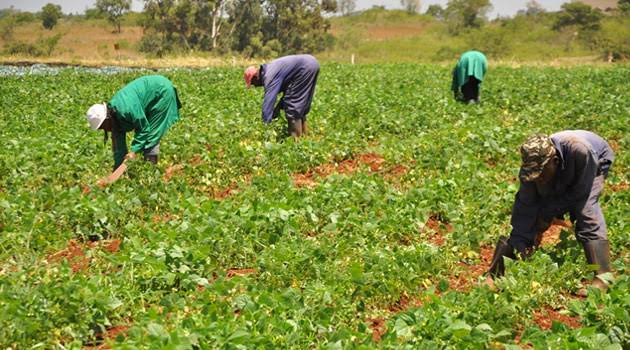
The Federal Government has been urged to implement new fiscal measures carefully to protect farmers, sustain local production, and strengthen Nigeria’s long-term food security.
KADUNA, Nigeria – A Professor of Finance and Entrepreneurship at Kaduna State University, Yusha’u Ango, has urged the Federal Government to implement its 2026 fiscal policy measures in a way that protects local farmers and preserves national food security.
Ango made the appeal in Kaduna while reacting to recently approved policy adjustments that include reductions in import duties on items such as vehicles, rice, palm oil, and sugar.
The new measures, outlined in a circular signed by Wale Edun, Minister of Finance and Coordinating Minister of the Economy, replaced the 2023 fiscal guidelines and took effect on April 1, 2026.
According to Ango, while the lower tariffs may ease consumer prices in the short term, they could weaken domestic agricultural production over time.
He recalled a similar intervention introduced about two years ago that allowed duty-free food imports for 150 days to combat rising prices.
That policy, he said, brought in cheaper imported food but hurt smallholder farmers who make up an estimated 60 to 70 per cent of Nigeria’s farming population.
“The cost of producing a bag of maize or rice became two to three times higher than the market price. This eroded their limited capital and left them worse off,” he said.
The economist noted that higher prices for fertilisers, pesticides, and other farm inputs have already placed heavy pressure on producers, warning that many may scale back operations this planting season.
He cautioned that although tariff cuts may temporarily lower food prices, they could eventually increase dependence on imports.
“In the short term, prices may drop, but over time we risk becoming reliant on imports, which is dangerous,” he said.
Ango advised the government to focus on lowering production costs for farmers rather than relying heavily on imports.
He also recommended that authorities purchase surplus produce from farmers at fair prices to help them recover costs and stabilise markets.
On reduced duties for vehicles and other goods, he said the policy could be positive if it supports local assembly plants and manufacturing.
“Reducing duties on vehicles is good, especially if it supports importation of components for local production,” he added.
Ango called for a broader economic strategy addressing inflation, poverty, and food security together.
He warned that if farmers continue to incur losses, many may abandon production, leading to greater import dependence.
“If farmers suffer losses, they lose momentum and interest to produce, and that means the country becomes dependent, which is not good,” he said.
He added that Nigeria has made notable gains in rice production in recent years and could replicate that progress across other agricultural value chains through consistent, farmer-friendly policies.
Visit GMTNewsng for more news stories.