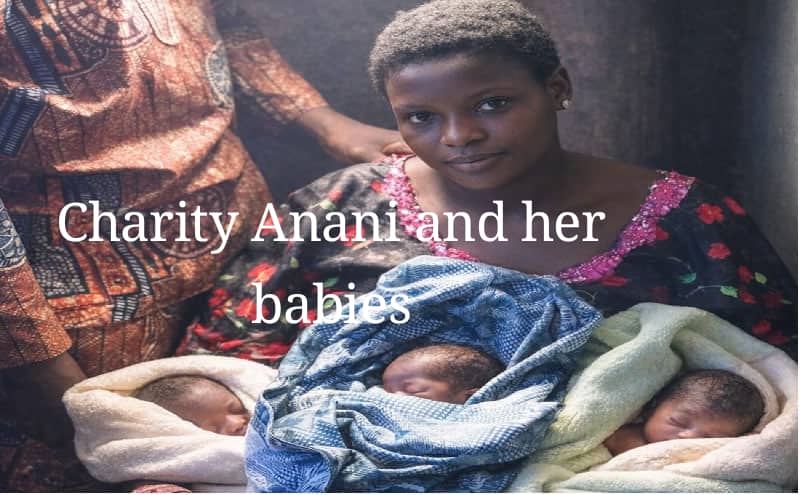
The tragic death of a Lagos mother of quadruplets over an unpaid hospital bill, first reported by Punch on April 12, 2026, has reignited debate on Nigeria’s fragile healthcare system and the urgent need for government intervention.
Quadruplets’ Mum Death: A Tragedy That Shook Lagos
The heartbreaking story of the Quadruplets’ Mum Death in Lagos continues to reverberate across Nigeria, days after it was first reported by The Punch on April 12, 2026. What began as a story of rare childbirth quickly descended into a painful narrative of loss, systemic failure, and the harsh realities facing ordinary Nigerians.
Mrs Charity Anani, a 28-year-old mother, had defied odds by delivering quadruplets at a private facility, Adebayo Hospital in Igando. But the joy that greeted the birth of her four babies was short-lived. Complications, financial strain, and what many have described as institutional neglect converged into a devastating outcome.
Her death on April 3, alongside one of her newborns, has since become a symbol of the human cost of inaccessible healthcare.
The Human Story Behind the Headlines
Beyond statistics and policy debates lies a deeply human story. Charity was not just a patient; she was a young mother who had already been raising a child and suddenly found herself caring for four more.
Her husband, Paul, now grapples with grief layered upon shock. In his account, Charity began experiencing breathing complications on the evening of April 2. By the next morning, despite being placed on oxygen and medication, she was gone.
Even more haunting is the quiet burden he carried. One of their babies, placed in an incubator, had died earlier. He chose not to tell Charity, fearing it would worsen her fragile state. That decision now lingers painfully in hindsight.
The family, already overwhelmed by a medical bill of about N3 million, had made partial payments but still owed N1.4 million at the time of the tragedy. Their detention at the hospital due to unpaid bills reflects a practice that, while not uncommon, continues to draw public outrage.
Quadruplets’ Mum Death and Nigeria’s Healthcare Reality
The Quadruplets’ Mum Death is not an isolated incident; it exposes deeper structural weaknesses in Nigeria’s healthcare system. For many citizens, access to quality medical care is still determined by their financial capacity rather than urgency or need.
Health insurance coverage remains limited, and out-of-pocket payments dominate. This leaves vulnerable families at risk of catastrophic health expenditure, often forcing them into debt, delay in care, or, in tragic cases like this, preventable loss of life.
Comparisons with countries that have stronger health indices reveal a consistent pattern: healthcare is rarely “free,” but it is systematically funded through robust insurance schemes and government-backed support structures. In Nigeria, the slow and uneven implementation of such frameworks continues to leave gaps.
A Wake-Up Call for Policy Action
This tragedy raises uncomfortable but necessary questions. How many more lives must be lost before healthcare becomes a guaranteed right rather than a privilege? What safeguards exist to prevent hospitals from detaining patients who cannot pay?
Experts have long argued that expanding compulsory health insurance is one of the most reliable pathways to achieving Universal Health Coverage. Yet, decades after early proposals in the 1960s and renewed advocacy in later years, progress has been inconsistent.
The reality is stark: when families must rely on public donations to settle hospital bills, the system is already failing them.
The Burden on the Common Man
For the average Nigerian, this story hits close to home. It reflects a daily fear-getting sick is not just a health risk but a financial gamble.
Charity’s case underscores how quickly a moment of joy can spiral into crisis. A family expecting twins suddenly welcomed four babies, an unexpected blessing that came with equally unexpected medical costs. Without institutional support, they were left to navigate a situation far beyond their means.
Today, three surviving babies remain in the care of relatives, growing up in the shadow of a loss that could perhaps have been avoided.
Where Do We Go From Here?
The conversation sparked by the Quadruplets’ Mum Death must not end with sympathy alone. It demands deliberate action from government at all levels.
Policies that ensure emergency care is not withheld due to inability to pay must be enforced. Health insurance schemes need to move beyond policy documents into widespread, functional reality. Private and public healthcare providers must operate within frameworks that prioritise life above profit.
Ultimately, this tragedy should serve as a turning point. Not just as another headline, but as a catalyst for reform.
Because behind every unpaid hospital bill is a human life-and, often, a family left to pick up the pieces.
Visit GMTNewsng for more news stories.