A Nigerian author and publisher, Dr Mohammed Abubakar, has urged the Federal Government to introduce compulsory military service for young Nigerians as a strategic response to the country’s worsening security situation.
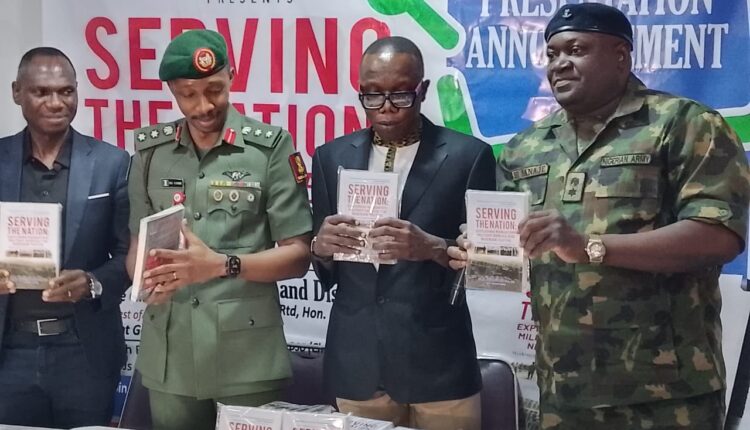
Abubakar made the call during the presentation of his book, “Serving the Nation: Exploring Mandatory Military Service for Nigerian Youths,” in Abuja, where he argued that structured national service could strengthen patriotism, discipline, and defence preparedness among the youth population.
According to him, insecurity across parts of the country – including terrorism, banditry, and communal violence – requires a bold, long-term policy response beyond conventional military operations.
Survey Shows Strong Public Backing
Citing findings from a survey referenced in his book, Abubakar said 73.1 percent of Nigerians support the introduction of mandatory military service for youths, while 79.7 percent believe it would significantly address the country’s security challenges.
He expressed confidence in the leadership of the Nigerian Army, particularly under the Chief of Army Staff, Lt.-Gen. Waidi Shuaibu, and the Minister of Defence, retired Gen. Christopher Musa, stressing that reforms must be supported by good governance, technological investment, and increased manpower.
Learning from Global Models
Abubakar pointed to countries such as Finland, Israel, South Korea, and Singapore as examples where compulsory military service has contributed to national cohesion and defence readiness.
Also speaking at the event, academic Dr A.K. Peters said Nigeria could adapt elements of these models to suit its unique social and security realities.
“In Finland, conscription remains a cornerstone of national defence, with service ranging between 165 and 347 days depending on assigned roles,” Peters noted.
He added that in South Korea, mandatory service – lasting between 18 and 21 months – is widely regarded as a rite of passage into adulthood, while in Israel, military service is deeply tied to national identity, with men serving between 30 and 36 months and women serving 24 months.
Call for Transparent Implementation
Peters emphasised that any such policy in Nigeria would require transparent administration, adequate funding, and equitable enforcement to avoid politicisation or abuse.
He argued that beyond security benefits, structured military service could promote youth empowerment, civic responsibility, and national unity.
Abubakar’s book explores the historical, legal, and policy dimensions of mandatory military service, offering a framework for how Nigeria might implement the system within its democratic structure.
The book presentation attracted senior military officers and key stakeholders, who described the publication as a timely contribution to national security discourse.
Visit GMTNewsng for more news stories.