A UNN professor, Obinna Onodugo, has warned Nigerians against kidney disease myths and spiritual interpretations of symptoms, urging early diagnosis and medical treatment to prevent complications.
A Professor of Internal Medicine and Nephrology, Obinna Onodugo, has urged Nigerians to seek early medical attention for kidney-related conditions rather than attribute symptoms to spiritual attacks or supernatural causes.
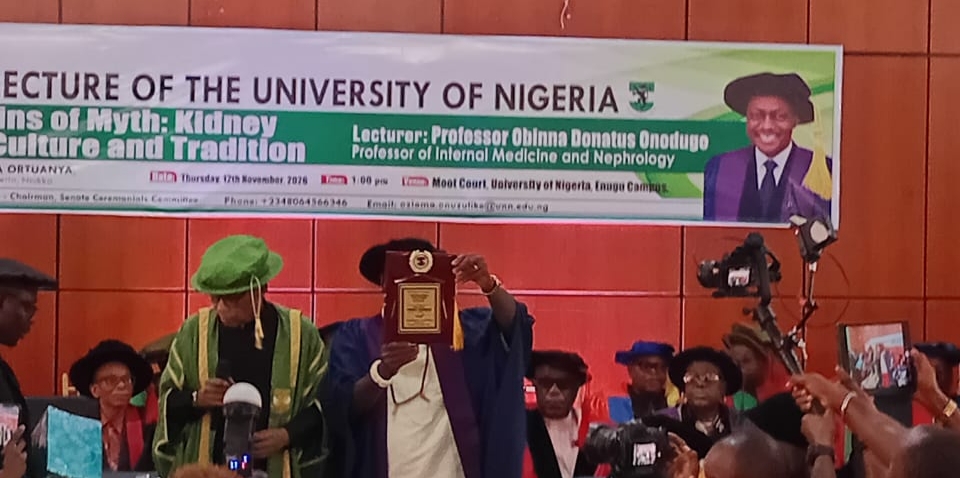
Onodugo gave the advice while delivering the 256th inaugural lecture of the University of Nigeria, Enugu Campus (UNEC), titled “Breaking the Chains of Myth: Kidney Disease, African Culture and Tradition”.
The professor, who is also the Chief Medical Director (CMD) of the University of Nigeria Teaching Hospital (UNTH), disclosed that between 10 and 15 per cent of Nigerians, representing approximately 25 million people, were living with kidney-related illnesses.
He emphasised that kidney disease was not a death sentence but warned that delayed diagnosis and treatment could worsen patients’ conditions and reduce their chances of recovery.
Onodugo identified hypertension, diabetes, obesity, glomerular diseases, HIV and other infections, as well as genetic susceptibility, as major contributors to kidney disease.
He explained that kidney conditions include Acute Kidney Injury (AKI) and Chronic Kidney Disease (CKD), with the latter characterised by abnormalities in kidney structure or function lasting for at least three months.
Citing findings from a health mission conducted by his Ibibo Foundation in Abor, Enugu State, the nephrologist said 11 per cent of the 1,941 participants screened had chronic kidney disease, while approximately 40 per cent were hypertensive.
He added that about 70 per cent of participants with hypertension were unaware of their condition.
According to him, hypertension accounted for 26 per cent of the identified risk factors in the study, while obesity contributed 14 per cent.
The professor also expressed concern over the use of nephrotoxic substances, including certain traditional herbal preparations and locally produced alcoholic drinks, warning that they could cause kidney damage.
He identified cultural beliefs, financial constraints and late presentation at healthcare facilities as major obstacles to accessing appropriate kidney treatment in Nigeria.
Onodugo observed that some people interpreted symptoms such as swollen legs as spiritual attacks or consequences of traditional practices instead of seeking medical attention.
However, he cautioned against dismissing African traditions, stressing that efforts should focus on discouraging harmful practices without undermining cultural identity.
“Some traditional medicines may be efficacious, but they need proper study and research,” he said.
He called for greater collaboration between medical practitioners and traditional institutions to build public confidence in healthcare services and encourage early medical consultations.
The nephrologist also urged traditional rulers to reconsider customary marriage and ceremonial payments involving cartons of alcoholic drinks, suggesting that books and educational materials could be encouraged as alternatives.
On preventive measures, he identified regular exercise, healthy diets and limited alcohol consumption as important steps towards reducing the risk of kidney disease.
He further called for improved access to kidney care and stronger government policies, expressing concern over the low level of health insurance coverage in Nigeria.
According to him, only about 10 per cent of Nigerians have health insurance coverage, compared with more than 80 per cent in developed countries.
Onodugo also discussed genetic susceptibility to kidney disease, particularly the APOL1 gene, which he said was prevalent among many people in South-East Nigeria.
He explained that carrying the gene did not automatically mean an individual would develop kidney disease but could increase vulnerability when combined with other risk factors, including obesity, diabetes and drug abuse.
Earlier, the Chairman of the Senate Ceremonials Committee, Prof. Ozioma Onuzulike, described the kidney as a vital organ and recalled how kidney-related complications had affected someone close to him.
Onuzulike called on the Federal Government to adopt the publication of inaugural lectures as a means of strengthening public health education and addressing kidney-related illnesses.
Visit GMTNewsng for more news stories.