Enugu Government has stepped up conflict prevention efforts, training livestock farmers, community leaders and other stakeholders on early intervention and peaceful coexistence.
The Enugu State Government has intensified efforts to prevent and manage conflicts that could undermine livestock production and investment, training farmers, host communities and other stakeholders on crisis prevention and peaceful coexistence.
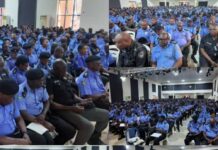
The training was organised by the Enugu State Livestock Productivity and Resilience Support Project (L-PRES) on Friday in Enugu under the theme, “Training of State-Level and Community-Level Stakeholders on Crisis Prevention, Mitigation and Management Strategies.”
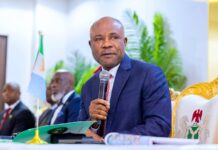
Speaking at the event, the Commissioner for Agriculture and Agro-Industrialisation, Dr Patrick Ubru, said the training was important to ensuring peaceful coexistence among farmers, livestock owners and host communities.
Ubru said the state was developing an integrated livestock value chain and stressed that effective engagement with communities was necessary for the sustainability of the investments.
He noted that conflicts between farmers and herders could disrupt agricultural production and investment, making it important for stakeholders to understand how to prevent, mitigate and manage potential crises.
The commissioner said the government was adopting a public-private partnership approach in developing livestock facilities, with host communities being involved in the process to encourage participation and ownership.
He also disclosed that the state had recruited 160 veterinary professionals to strengthen animal-health services and support livestock development across the state. The recruitment has been independently reported by the Enugu L-PRES office as part of efforts to improve veterinary services and disease prevention across the state’s 17 local government areas.
Ubru said the ongoing Integrated Livestock Development Centre at Ubahu-Amankanu in Nkanu East Local Government Area, including its 15,000-cattle ranching facility, was designed to improve livestock productivity, create jobs and strengthen the livestock value chain.
He urged farmers, livestock owners, veterinary professionals, extension workers, community leaders and government agencies to collaborate on early reporting, vaccination, biosecurity, dialogue and peaceful coexistence.
The state government has also identified community engagement and risk management as important components of L-PRES implementation. The project’s official Enugu platform describes its approach as combining farmer training, veterinary support and strong community networks to improve livestock productivity and resilience.
The State Project Coordinator of L-PRES, Dr Ifeyinwa Nnajieze, said the involvement of host communities was critical to the sustainability of the livestock projects being implemented by the state.
Nnajieze said the government was deliberately involving traditional rulers, women leaders, youths and farmers so that communities could take ownership of the interventions after the L-PRES programme.
She said the approach would help bridge the gap between government and host communities while promoting sustainability and revenue generation.
According to her, the state’s livestock value chain covers cattle, sheep and goats, poultry and piggery, with the training designed to improve coordination among stakeholders.
She listed some of the state’s livestock investments as artificial insemination and breed multiplication, a 15,000-capacity ranch, climate-smart irrigated pastures, aquaponics, modern meat processing and packaging facilities, and a milking parlour.
Nnajieze said the interventions were aimed at transforming livestock production into a sustainable business capable of creating employment and improving livelihoods.
Dr George Nwachi, President-General of Amankanu Community in Nkanu East and Permanent Secretary in the Enugu State Ministry of Health, said the community initially had concerns about the amount of land required for the livestock development project.
Nwachi said the concerns were addressed after government officials engaged community leaders and explained the objectives and expected benefits of the project.
He said community leaders subsequently communicated the information to residents, resulting in increased support for the project and greater participation by youths.
According to him, sustained engagement by government officials helped reduce tension and build trust between the community and the state government.
Nwachi commended the Commissioner for Agriculture for listening to the community’s concerns and providing explanations about the project.
He said residents were now seeing the project take shape and expressed hope that it would provide employment and other economic opportunities for members of the community.
The establishment of the Ubahu Integrated Livestock Development Centre is part of the state’s wider L-PRES investment programme. Procurement records show that the Enugu State Ministry of Agriculture and Agro-Industrialisation initiated the project under L-PRES for an integrated livestock development centre at Ubahu.
A poultry farmer and training participant, Mrs Nnenna Obioha, said the programme had equipped her with useful knowledge on preventing conflicts from escalating.
Obioha said she learnt that conflicts were easier to manage or resolve when addressed at their early stages.
“I just learned from the speaker that crisis should be resolved early instead of allowing it to escalate,” she said.
The training forms part of ongoing efforts by the Enugu State Government and L-PRES to strengthen livestock production while addressing potential social, environmental and animal-health risks associated with the expansion of the sector.
Visit GMTNewsng for more news stories.