The Kaduna State Government emphasizes that its comprehensive peace framework prioritizes victims of banditry while providing structured support, housing, and rehabilitation.
The Kaduna State Government has reaffirmed its security architecture, stating categorically that its comprehensive peace model firmly prioritizes victims of banditry and affected communities rather than elevating or condoning unrepentant criminals.
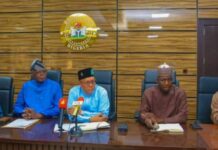
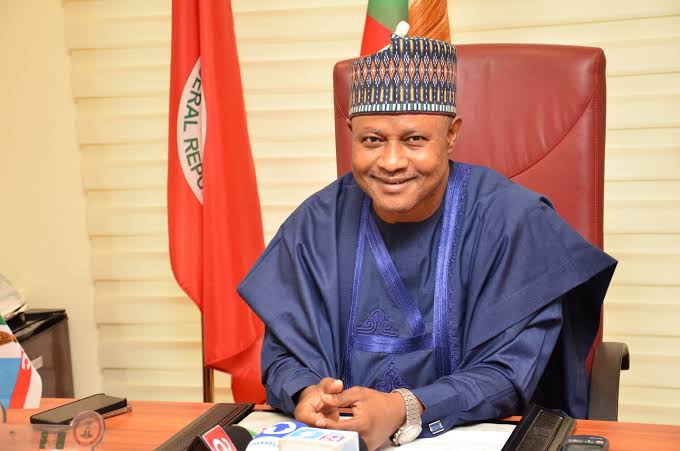
The disclosure was made by the Commissioner for Information and Culture, Malam Ahmad Maiyaki, during a media briefing detailing the state’s multi-layered approach to combating insecurity and fostering long-term stability.
According to Maiyaki, the administration’s strategy is built on the premise that justice and state resources must first serve those who bear the brunt of criminal activity.
“You cannot focus more on a criminal and abandon the victim of the criminality,” Maiyaki stated, outlining the government’s robust resettlement and welfare programs.
As part of this victim-centred approach, the state has partnered with the government of Qatar to provide permanent housing for internally displaced persons (IDPs), moving them out of dilapidated temporary shelters. Furthermore, the state has extended fully furnished homes, healthcare, and educational scholarships to vulnerable families, including the children of a slain pastor and victims in Maraban Rido.
Addressing concerns over the rehabilitation of criminals, the commissioner clarified that any reintegration process is strictly coordinated through the Office of the National Security Adviser (ONSA).
Repentant bandits must undergo rigorous profiling, disarmament, and psychosocial evaluation, and they must secure full acceptance from their local communities before any consideration of return. Maiyaki stressed that repentance does not confer immunity from prosecution, warning that security agencies will deal decisively with anyone who persists in criminal behavior.
To reinforce conventional military, police, and Department of State Services (DSS) operations, Kaduna has deployed 1,000 trained forest guards following presidential approval. Community ownership remains a cornerstone of the model, empowering residents to supply critical intelligence while collaborating with neighboring states – including Plateau, Bauchi, Kano, Katsina, Niger, Zamfara, Nasarawa, and the FCT – to curb cross-border banditry and prevent reprisal attacks.
The state’s security framework has yielded tangible dividends in restive corridors like Birnin Gwari, where commercial activities, farming, education, and healthcare are steadily reviving.
Authorities report that approximately 500 hectares of farmland have been recovered, allowing farmers to return to agricultural production. The recent reopening of the Birnin Gwari livestock market has also spurred economic growth, with cattle being transported to Lagos on a weekly basis.
To complement these gains, infrastructural projects are underway. The Kaduna State Government is implementing a 36-kilometer road network linking crucial farming communities, while the Federal Government has commenced the reconstruction of the 122-kilometer Mando–Birnin Gwari road—a vital economic artery connecting northern and southern Nigeria.
On social welfare, the commissioner emphasized that education remains an absolute right for every child, free from the stigma of parental background.
“We do not want to profile children as children of criminals because that can affect their learning and reintegration,” Maiyaki noted.
Having inherited a baseline of 550,000 out-of-school children, the administration continues to roll out inclusive educational interventions designed to uplift youth across the state regardless of circumstance, ensuring that long-term social stability anchors the ongoing non-kinetic peacebuilding efforts.
Visit GMTNewsng for more news stories.