President Bola Tinubu has ordered a comprehensive national security threat assessment and approved a rolling five-year strategic defence operations plan to strengthen coordination among Nigeria’s security agencies.
President Bola Ahmed Tinubu has ordered the immediate preparation of a comprehensive National Threat Assessment and a rolling five-year Strategic Defence Operations Plan aimed at strengthening coordination among Nigeria’s defence, intelligence and security agencies.
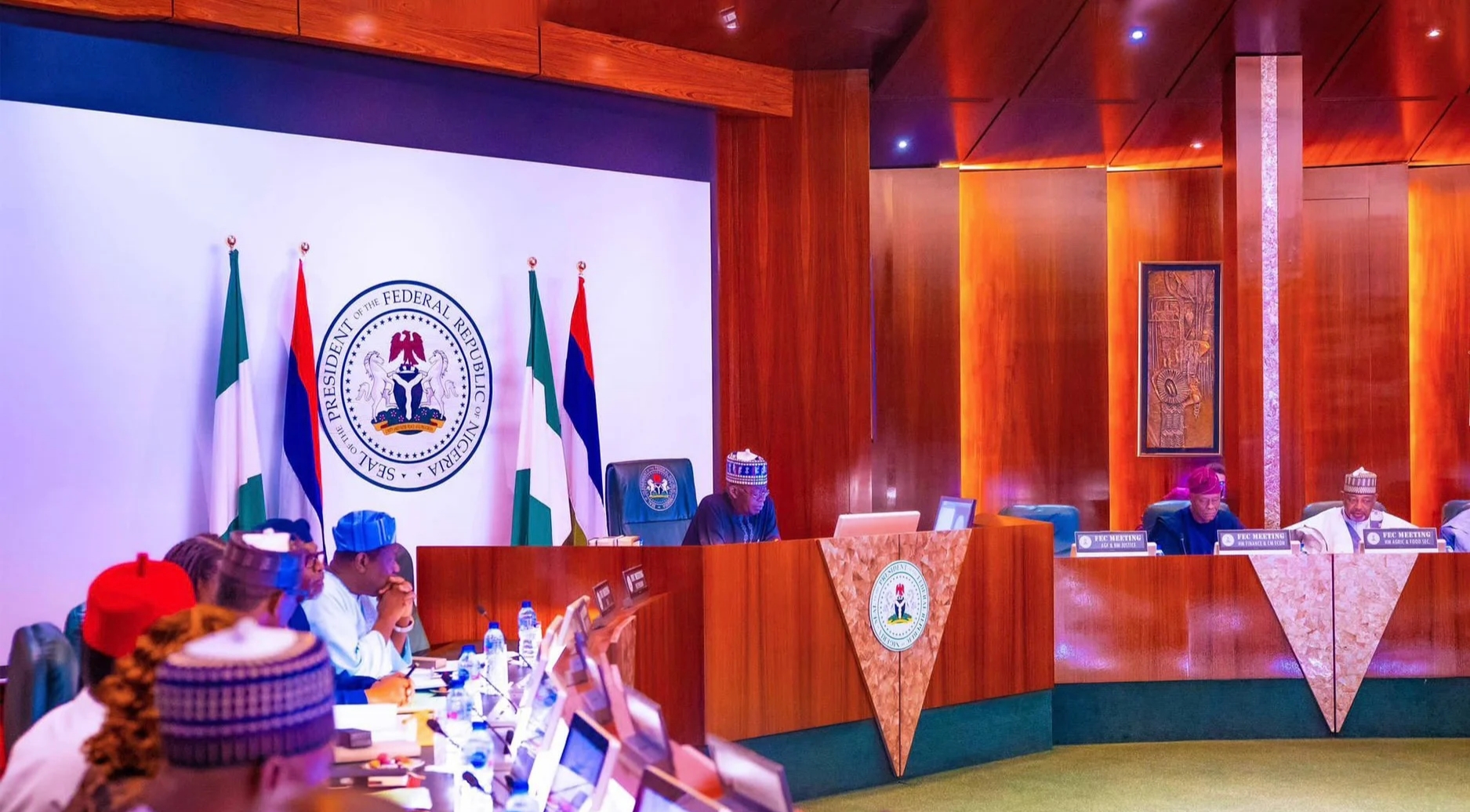
The President gave the directive on Wednesday during the Federal Executive Council (FEC) meeting at the State House, Abuja, stressing the need for a coordinated national framework capable of responding effectively to Nigeria’s evolving security threats.
Under the directive, the President’s Special Adviser on Homeland Security, Major General Adeyinka A. Famadewa, will coordinate and provide secretariat support to an 11-member committee responsible for preparing the strategic defence operations plan.
Other members of the committee include National Security Adviser, Mallam Nuhu Ribadu; Minister of Defence, General Christopher Musa; Minister of State for Defence, Alhaji Bello Muhammad Matawalle; Chief of Defence Staff, General Olufemi Oluyede; Chief of Army Staff, Lieutenant General Waidi Shaibu; Chief of Air Staff, Air Marshal Sunday Kelvin Aneke; and Chief of Naval Staff, Vice Admiral Idi Abbas.
The committee also includes the Director-General of the Department of State Services, Tosin Ajayi, and the Director-General of the National Intelligence Agency, Ambassador Muhammed Muhammed.
President Tinubu said the new security framework would establish a common understanding of the threats facing Nigeria, define operational objectives and identify the capabilities required to address them.
According to the President, recent security successes, including the rescue of pupils and teachers abducted in Oriire Local Government Area of Oyo State, demonstrated the benefits of stronger coordination among defence, intelligence and security agencies.
“The operation demonstrated what can be achieved when our agencies work together with a clear objective and the necessary intelligence,” Tinubu said.
Tinubu said operational requirements were often considered separately by individual agencies without adequate reference to an agreed national threat assessment or unified medium-term strategy.
He said the absence of such a framework could make coordination more difficult and limit the efficient deployment of national security resources.
The proposed National Threat Assessment will identify the principal threats facing the country, determine their relative urgency and establish operational objectives for addressing them.
The Strategic Defence Operations Plan will then translate the assessment into specific operational priorities.
According to the President, the plan will identify the forces and capabilities required in each operational theatre, existing capability gaps, equipment and support requirements, as well as a timetable for implementation.
The committee is authorised to consult or co-opt representatives of other ministries, departments and agencies where their participation is considered necessary.
President Tinubu directed the committee to begin work immediately and submit the completed National Threat Assessment and Strategic Defence Operations Plan for his consideration and approval within 90 days.
Once approved, the five-year plan will become the principal framework for coordinating military and defence operations over the medium term.
It will also provide the basis for developing a corresponding multi-year defence expenditure and procurement plan, with the aim of ensuring that government resources are channelled towards agreed operational priorities and critical national security requirements.
The President further directed the Secretary to the Government of the Federation and the Office of the National Security Adviser to take all necessary steps to implement the directives immediately.
The move represents a significant attempt by the Tinubu administration to shift national defence planning towards a more integrated, medium-term approach, linking threat assessment, military capabilities, procurement and expenditure planning.
The initiative is expected to provide security agencies with a common strategic framework for responding to threats while improving coordination and resource allocation across Nigeria’s defence and intelligence architecture.
Visit GMTNewsng for more news stories.