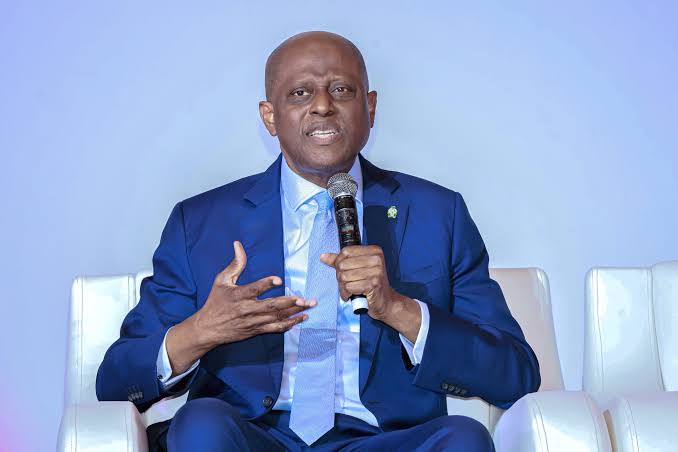
Central Bank of Nigeria Governor Yemi Cardoso has revealed that the nation’s gross external reserves have surged to $52.52 billion, providing nearly 11 months of import cover as the Monetary Policy Committee holds the benchmark interest rate at 26.5 percent.
Nigeria’s foreign exchange position has received a significant boost as gross external reserves climbed to $52.52 billion as of July 17, 2026, marking a substantial increase from the $50.47 billion recorded at the end of May.
The Governor of the Central Bank of Nigeria (CBN), Olayemi Cardoso, disclosed the financial milestone on Tuesday in Abuja while presenting the official communique at the conclusion of the 306th meeting of the Monetary Policy Committee (MPC).
According to the apex bank chief, the steady accumulation of foreign buffers was primarily driven by healthy receipts from crude oil-related taxes and sustained third-party capital inflows into the domestic economy.
Cardoso highlighted that the current reserve level is sufficient to finance approximately 11 months of imports of goods and services, easily surpassing the international standard benchmark of three months’ import cover and providing a robust defense against potential external economic shocks.
During the two-day briefing, the CBN governor announced the committee’s unanimous decision to maintain its current monetary stance by retaining the benchmark Monetary Policy Rate (MPR) at 26.5 percent.
Additionally, the MPC held the Standing Facilities Corridor around the MPR at +50/-450 basis points, while preserving the Cash Reserve Requirement (CRR) for Deposit Money Banks at 45.00 percent, Merchant Banks at 16.00 percent, and non-TSA public sector deposits at 75.00 percent to sustain system liquidity control.
Reviewing key domestic price indicators, Cardoso observed that headline inflation experienced a marginal ease to 15.91 percent year-on-year in June from 15.93 percent in May, effectively snapping a three-month streak of upward price pressures.
While food inflation rose to 17.52 percent due to localized supply chain constraints, core inflation moderated to 15.92 percent, anchored firmly by exchange rate stability in the foreign exchange market.
Evaluating underlying growth dynamics, the central bank governor reported that real Gross Domestic Product (GDP) registered a 3.89 percent expansion in the first quarter of 2026.
This output growth was overwhelmingly propelled by the non-oil sector, which expanded by 3.94 percent on the back of strong gains in telecommunications, financial services, trade, and transport sub-sectors.
In contrast, oil sector GDP growth slowed to 2.57 percent in the first quarter due to routine facility maintenance and installation overhauls, though recent operational figures show a positive turnaround with the composite Purchasing Managers’ Index (PMI) expanding to 50.1 index points in June.
Looking ahead, Cardoso expressed optimism that ongoing structural reforms, improving crude output, and upcoming seasonal harvest arrivals will further subdue medium-term disinflation risks, provided geopolitical escalations in the Middle East do not destabilize global energy markets.
Visit GMTNewsng for more news stories.