The United Nations has reaffirmed its commitment to supporting durable solutions for displaced persons in Nigeria, focusing on long-term recovery, social inclusion, livelihoods, and sustainable development.
The United Nations has reaffirmed its commitment to advancing durable solutions for displaced persons in Nigeria, underscoring the need for long-term interventions that promote dignity, self-reliance, and social inclusion.
The pledge was made by the UN Resident and Humanitarian Coordinator in Nigeria, Mohamed Fall, during the inaugural Project Steering Committee meeting of the Sustainable Urban Integration of Displaced Population in Adamawa, Yobe and Kano States in Nigeria (SIDPIN), held in Abuja.
The meeting, organised by the International Organization for Migration (IOM), also reviewed the European Union Support for Protection, Assistance and Durable Solutions in Sokoto (SPADS) project and explored strategies for strengthening collaboration in support of displaced populations and host communities across affected regions.
Speaking at the event, Fall said the UN remains committed to supporting sustainable solutions that move beyond emergency assistance and help displaced populations rebuild their lives.
According to him, the organisation’s Common Programme on Durable Solutions reached more than 200,000 children and adolescents in 2025 through education and skills development initiatives implemented in communities prioritised for durable solutions.
He added that nearly 150,000 people gained access to sustainable livelihood opportunities, while close to 40,000 individuals were supported in obtaining essential civil documentation.
“We must continue to build on local solutions that are owned by communities and on practical examples that can be expanded and sustained,” Fall said.
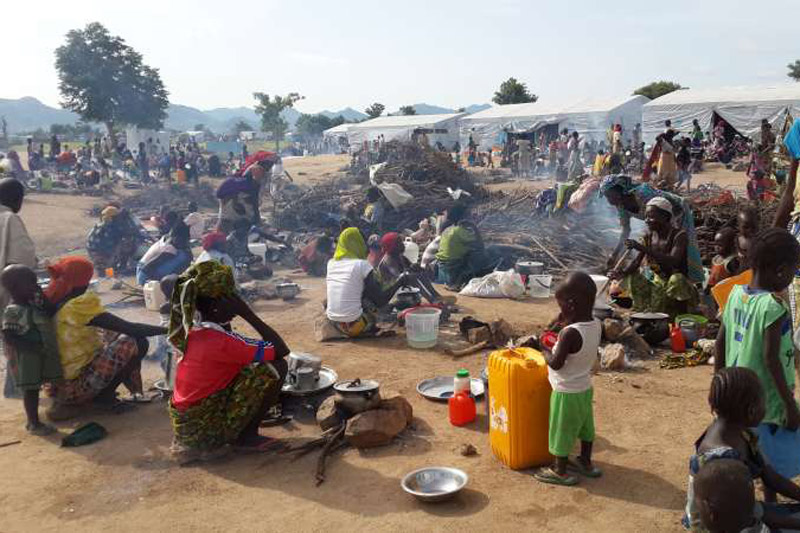
The UN official noted that Nigeria currently hosts approximately 3.5 million internally displaced persons, particularly in regions affected by conflict, insecurity, and humanitarian crises.
He stressed that displacement should not be viewed solely through a humanitarian lens but also as a development and human rights challenge requiring coordinated and sustainable responses.
“Displacement is also a development challenge and a human rights imperative. No one should be left behind in the long journey towards dignity.
“The momentum for durable solutions is growing in Nigeria, and it must continue to grow stronger,” he stated.
Also speaking, the Minister of Humanitarian Affairs and Poverty Reduction, Prof. Nentawe Yilwatda, represented by the ministry’s Permanent Secretary, Mr. Olubunmi Olusanya, emphasised the importance of sustained collaboration among stakeholders.
He said the progress achieved under various intervention programmes reflected the shared commitment of government institutions and development partners to improving the welfare of displaced persons and host communities.
According to him, experience has demonstrated that durable solutions require an integrated approach that combines humanitarian assistance, development programmes, and peacebuilding initiatives.
“While humanitarian interventions remain indispensable, experience has shown that durable solutions require a more integrated approach that bridges humanitarian action, development efforts and peacebuilding initiatives,” he said.
The Ambassador and Head of the European Union Delegation to Nigeria and ECOWAS, Gautier Mignot, also reaffirmed the EU’s support for long-term, solutions-driven interventions aimed at addressing the root causes and consequences of displacement.
Mignot stressed that sustainable recovery depends on investments capable of creating economic opportunities and strengthening local communities.
“We need to build a future, and this future is still largely unbuilt. This can only happen if we focus on sustainable investment.
“Sustainable investment requires economic analysis, proper planning and the involvement of the private sector,” he said.
The EU-backed projects place particular emphasis on improving living conditions and enhancing resilience among women, children, and other vulnerable groups affected by displacement and socio-economic challenges.
Stakeholders at the meeting agreed that stronger partnerships, community ownership, and sustained investments would be critical to achieving lasting solutions for displaced persons and ensuring their successful integration into society.
The renewed commitment by the UN, the Federal Government, and development partners highlights growing efforts to shift from emergency relief towards long-term recovery and sustainable development for millions of displaced Nigerians.
Visit GMTNewsng for more news stories.