
With additional reports by Roberts Orji (Enugu), and Kefas Akase (Abuja)
𝐀 𝐃𝐞𝐚𝐥 𝐨𝐧 𝐏𝐚𝐩𝐞𝐫, 𝐀 𝐂𝐨𝐦𝐦𝐮𝐧𝐢𝐭𝐲 𝐢𝐧 𝐃𝐢𝐬𝐩𝐮𝐭𝐞
In Ajame Akpawfu, Nkanu East Local Government Area of Enugu State, a proposed cement manufacturing project has triggered a deepening dispute that cuts across law, economics and community legitimacy. At the centre of the controversy is a detailed but unsigned Memorandum of Understanding (MOU) involving GoalMark Superjet International Company Limited and individuals presented as representatives of the Ajame Akpawfu Autonomous Community.
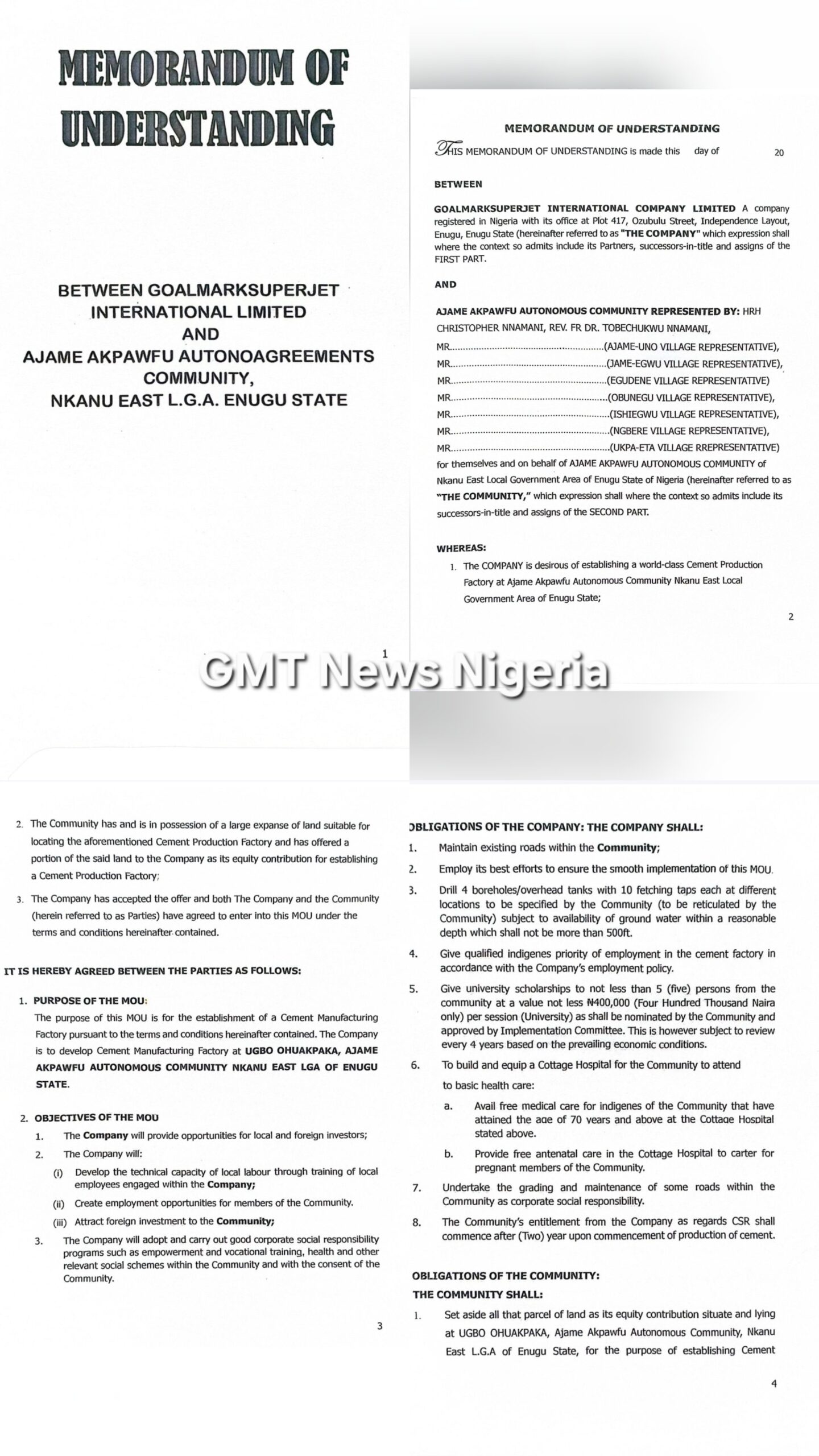
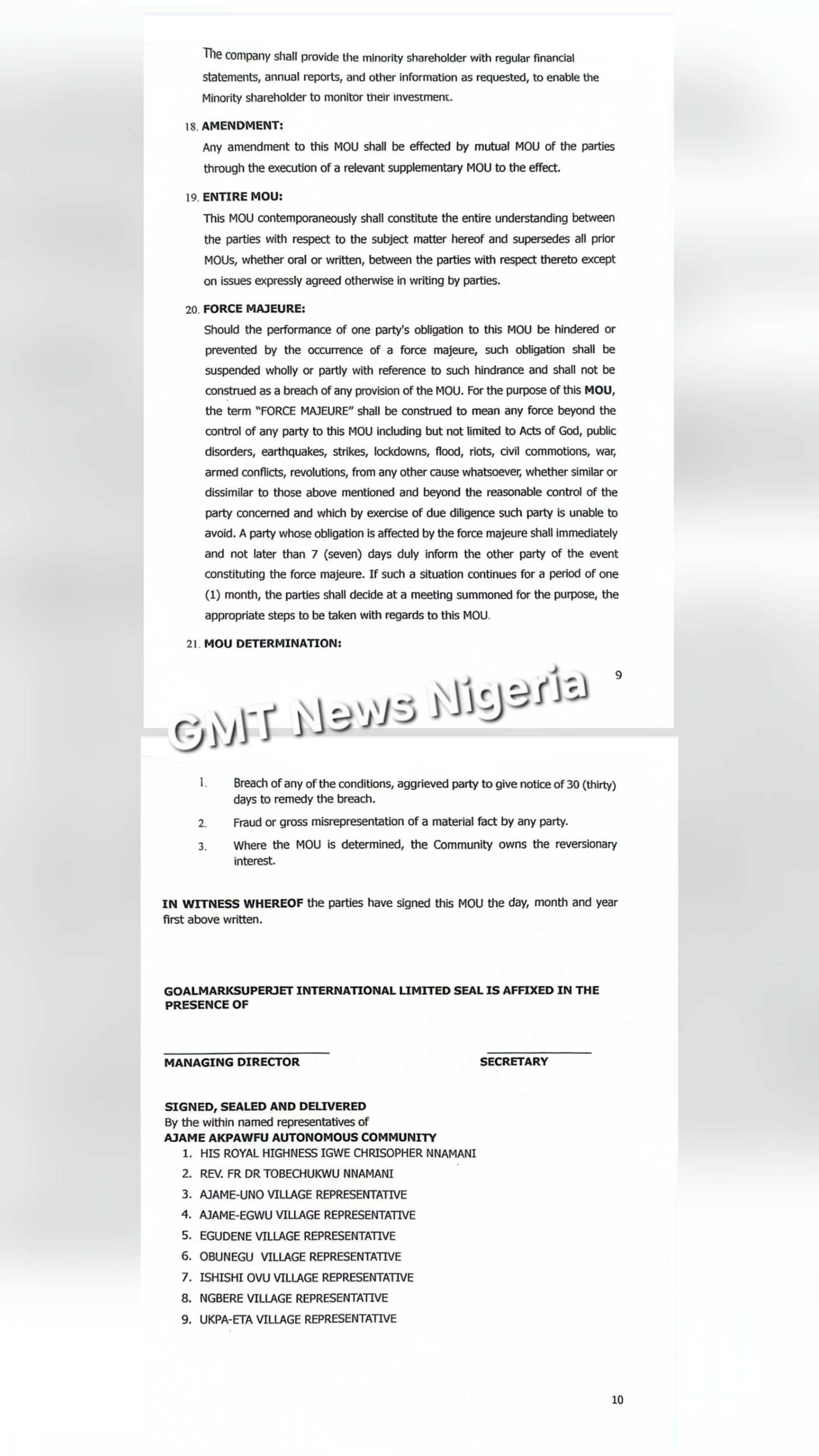
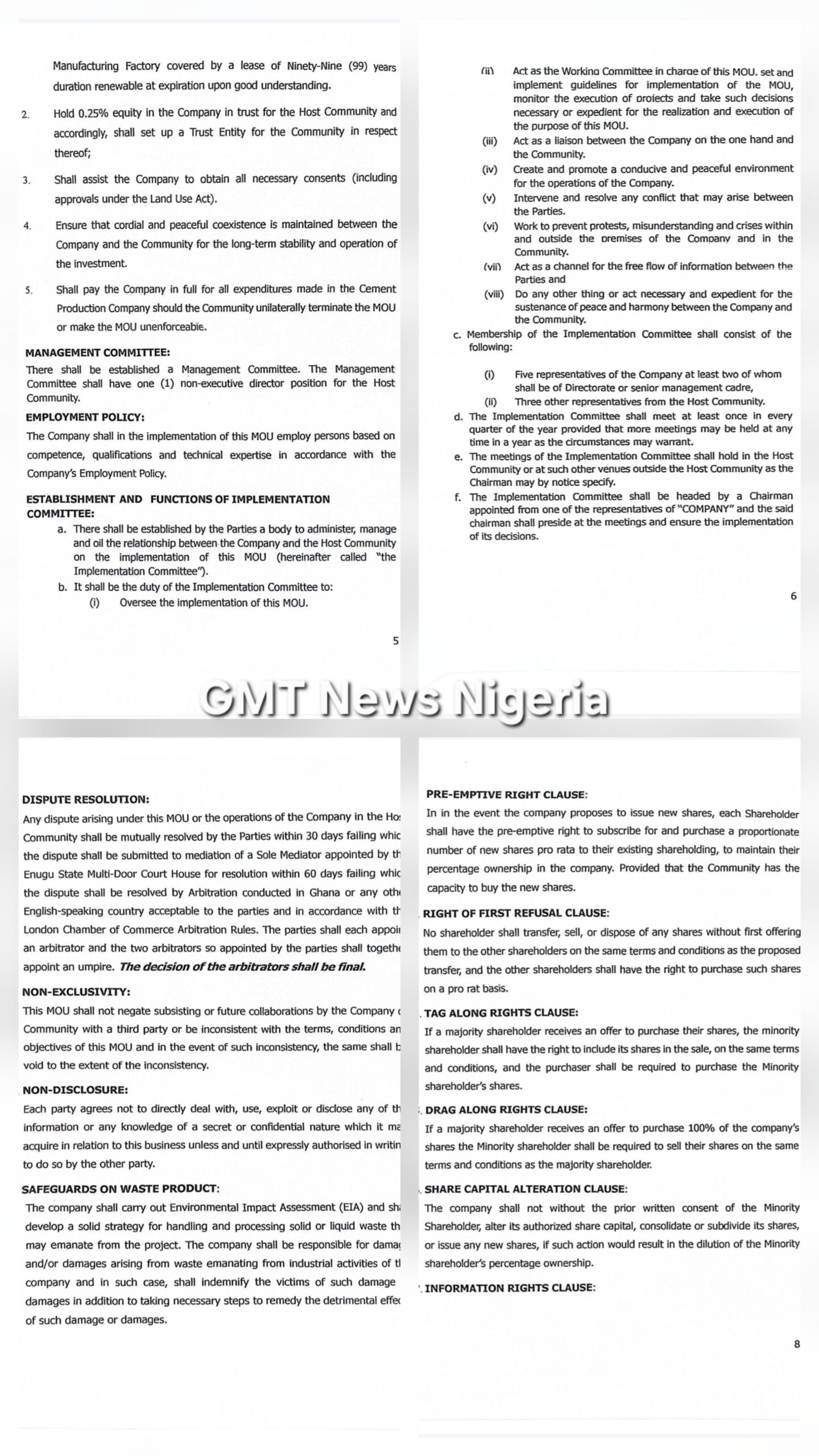
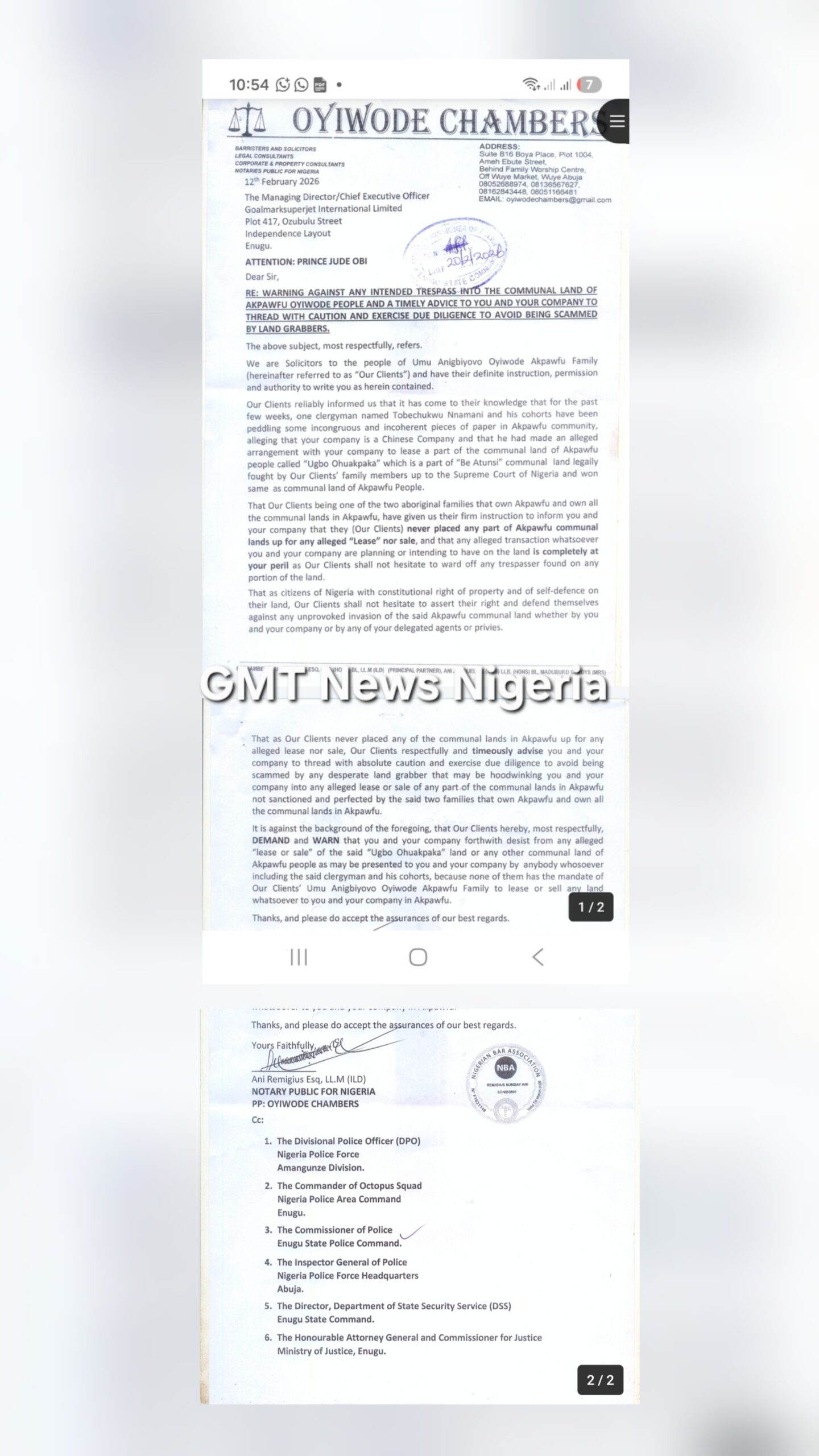
The document, along with a formal petition by aggrieved landholding families addressed to the CEO of GoldMark Superjet International Company Limited and copied to the Enugu State Attorney General and Commissioner for Justice, and to security agencies, was sighted by this publication and is attached as supporting material. Together, they form the evidentiary backbone of a dispute that has now drawn calls for intervention by Governor Peter Mbah.
While the MOU remains unsigned, its provisions—and the process that produced it—have become a flashpoint in a community still recovering from recent internal conflict.
The MOU goes far beyond a preliminary concept note. What is contested is whether those who negotiated it had the authority to do so—and whether its terms pass even a basic test of fairness for a land-contributing host community.
𝐖𝐡𝐚𝐭 𝐭𝐡𝐞 𝐃𝐨𝐜𝐮𝐦𝐞𝐧𝐭𝐬 𝐑𝐞𝐯𝐞𝐚𝐥
Document 1, the draft MOU, outlines a proposed cement plant to be sited at Ugbo/Ohuakpaka. It provides that land belonging to the community would be contributed as equity, while the investor undertakes construction and operations.
Crucially, the document grants the company a 99-year lease, renewable, over the land. In return, the host community is allocated 0.25 percent equity, to be held in trust.
Governance provisions further show that an Implementation Committee would comprise five representatives of the company and three from the community. Dispute resolution clauses provide for escalation from local mediation to arbitration outside Nigeria.
Document 2, the petition by members of the UmuanigbIyovo Oyiwode family, challenges both the process and substance of the MOU. The petitioners argue that they were excluded from negotiations despite being legally recognised co-owners of Akpawfu land, and warn that any attempt to proceed without their consent could lead to renewed unrest.
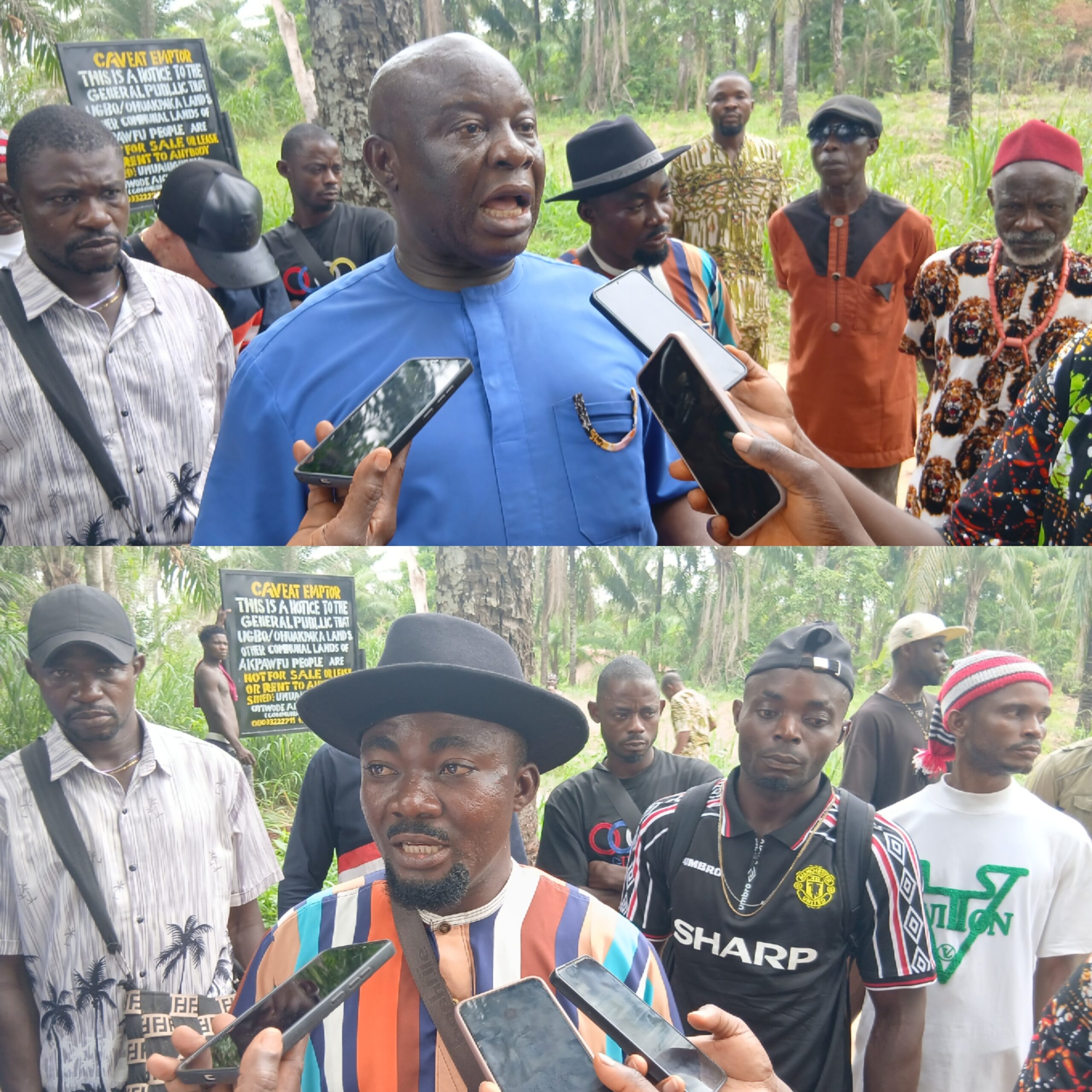
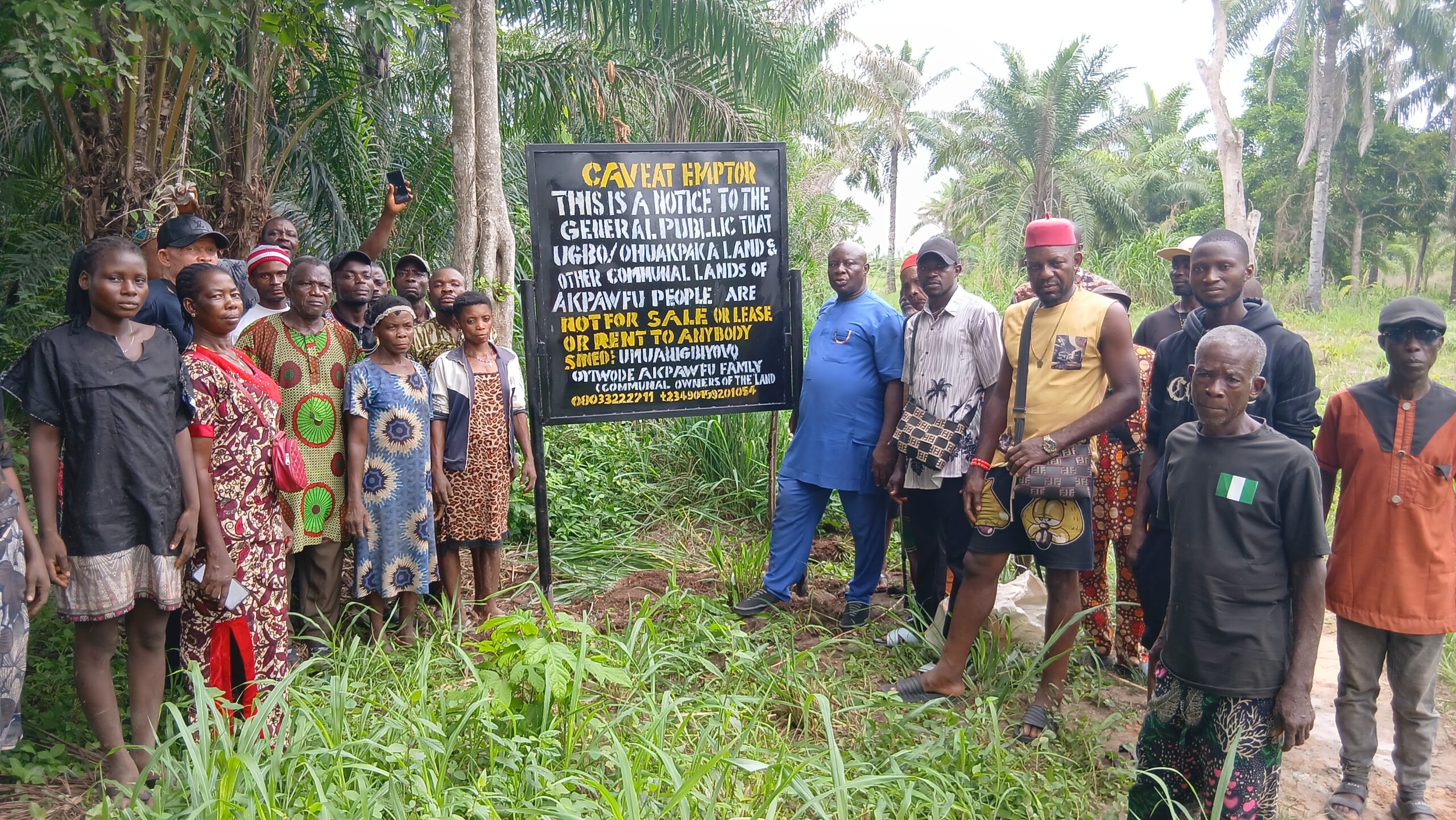
 Significantly, the dispute is not confined to documents alone. The protesting families recently took journalists to the site of the proposed cement plant in Akpawfu for an on-the-spot assessment of the disputed land. At the location, they identified areas of contention and mounted a notice on the property bearing the inscription:
“CAVEAT EMPTOR – THIS IS A NOTICE TO THE GENERAL PUBLIC THAT UGBO/OHUAKPAKA LANDS AND OTHER COMMUNAL LANDS OF AKPAWFU PEOPLE ARE NOT FOR SALE, LEASE OR RENT TO ANYBODY. SIGNED: UMUANIGBIYOVO OYIWODE AKPAWFU FAMILY.. ”
It was during a review of documents presented on site, including the Memorandum of Understanding for the proposed project, that journalists sighted the names of Igwe Christopher Nnamani and Rev. Fr. Dr. Tobechukwu Nnamani among the listed signatories.
𝐎𝐰𝐧𝐞𝐫𝐬𝐡𝐢𝐩 𝐚𝐧𝐝 𝐭𝐡𝐞 𝐒𝐮𝐩𝐫𝐞𝐦𝐞 𝐂𝐨𝐮𝐫𝐭 𝐐𝐮𝐞𝐬𝐭𝐢𝐨𝐧
At the core of the dispute is the question of who has the authority to commit communal land.
According to Desmond Nnaji, youth secretary in the area, ownership of Akpawfu land was the subject of a protracted legal battle resolved by the Supreme Court in 2008. The ruling, he said, affirmed that the UmuanigbIyovo Oyiwode and Umuani Oyiwode families have equal ownership rights.
“That judgment settled the matter,” Nnaji stated. “You cannot now take decisions about the land without involving those families.”
The MOU, however, structures representation along village lines and lists specific signatories, including the traditional ruler and Rev. Fr. Nnamani. It does not explicitly recognise the two umbrella family blocs as corporate landholding entities.
In Nigerian property law, that distinction matters. Customary land is not merely geographic; it is vested in identifiable lineages or families. Transactions undertaken without the consent of those vested interests can be voidable—sometimes outright void—particularly where there is evidence of exclusion.
A property lawyer familiar with community–investor agreements, who requested anonymity due to the sensitivity of the matter, reviewed excerpts of the document. His assessment was blunt: “If the Supreme Court has already determined the beneficial owners, any agreement that sidesteps them is on shaky ground from inception. You can’t cure defective consent with paperwork later.”
This raises a central question: even if the MOU had been signed, would it have survived a legal challenge?
𝐓𝐡𝐞 𝐄𝐜𝐨𝐧𝐨𝐦𝐢𝐜𝐬 𝐨𝐟 𝐚 𝐌𝐚𝐫𝐠𝐢𝐧𝐚𝐥 𝐒𝐭𝐚𝐤𝐞
Beyond legality lies the issue of value.
The MOU assigns the community a 0.25 percent equity stake to be warehoused in a trust in exchange for land that forms the foundation of the proposed project. Industry benchmarks suggest that cement plants require significant capital investment, making land a critical input.
An independent extractive-industry analyst who reviewed the structure described such an equity allocation as “limited in practical influence,” noting that meaningful participation typically requires both higher equity and governance rights.
In this case, governance provisions tilt control toward the investor, with the community holding a minority position on the Implementation Committee. Standard shareholder protections exist in the document, but they do not materially shift decision-making power.
𝐑𝐢𝐬𝐤 𝐀𝐥𝐥𝐨𝐜𝐚𝐭𝐢𝐨𝐧 𝐚𝐧𝐝 𝐂𝐨𝐦𝐦𝐮𝐧𝐢𝐭𝐲 𝐎𝐛𝐥𝐢𝐠𝐚𝐭𝐢𝐨𝐧𝐬
The MOU also outlines obligations that fall heavily on the community. It requires the host community to provide land, facilitate approvals, maintain peace and ensure that operations are not disrupted.
By contrast, the company’s commitments—such as boreholes, scholarships, road maintenance and a cottage hospital—are framed as corporate social responsibility and, in some cases, deferred until after production begins.
Dispute resolution provisions further complicate matters, requiring unresolved issues to be taken to arbitration outside Nigeria, a step that may pose financial and logistical challenges for community stakeholders.
“𝐖𝐞 𝐖𝐞𝐫𝐞 𝐍𝐨𝐭 𝐂𝐚𝐫𝐫𝐢𝐞𝐝 𝐀𝐥𝐨𝐧𝐠”
Members of the protesting family insist that the process leading to the unsigned Akpawfu cement MOU lacked inclusiveness.
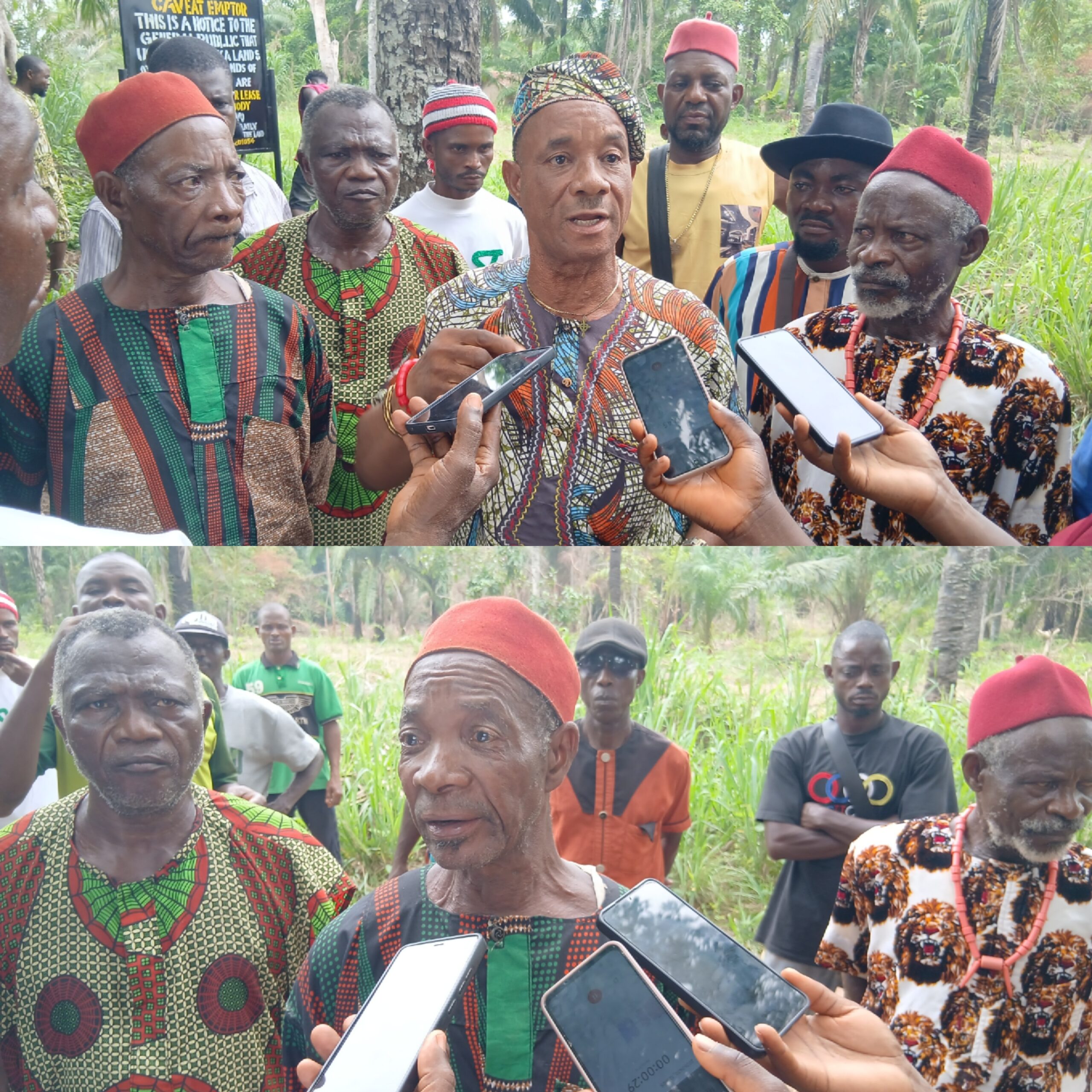
Chief Fidelis Arum, Vice President of the UmuanigbIyovo Oyiwode bloc, said he was invited to a meeting at the palace of the traditional ruler where the proposal was presented for signing.
“I refused to sign and reported the development to my family,” he said. “We all said no because we were not involved during the negotiations leading to the drafting of the MOU.”
He added that the land identified for the project includes inhabited areas. “Ohuakpaka is already occupied. If this stands, people living there may be asked to leave one day.”
Chief Nwafoeze Nnamani echoed the concern, stating that attempts by a section of the community to lease communal land for 99 years were unacceptable. “We say no to that,” he said.
Chief Ikechukwu Udenweze, General Secretary of the group, called on the state government to intervene. “We are appealing to the government of Enugu State not to allow those trying to override our rights to proceed,” he said.
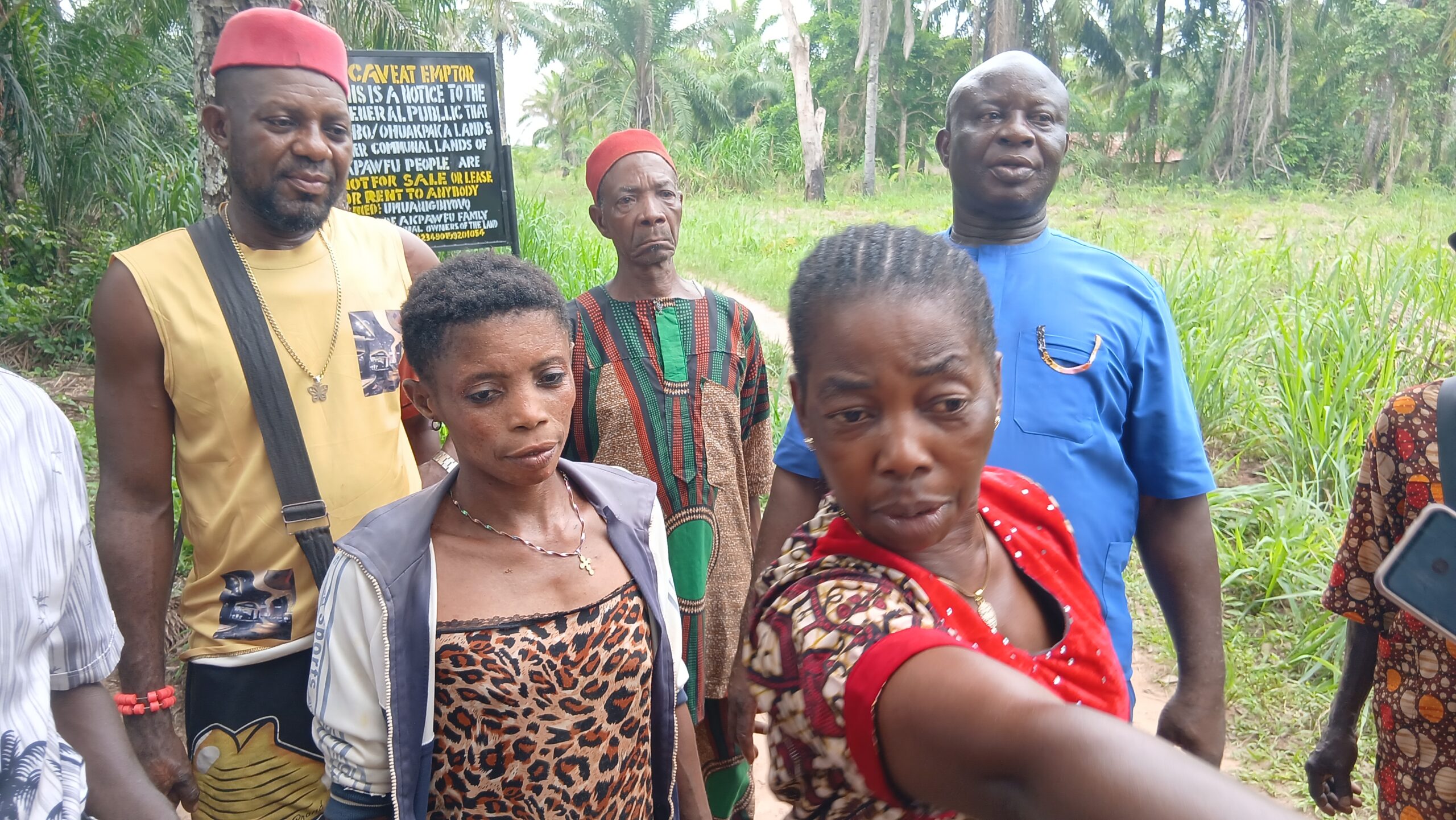
Ifesinachi Ogbodo, a resident, aligned with the position of the protesting family, warning that decisions taken now could have lasting consequences. “If this is allowed, our children may not have anywhere to call home,” she said.
𝐀 𝐂𝐨𝐦𝐦𝐮𝐧𝐢𝐭𝐲 𝐰𝐢𝐭𝐡 𝐑𝐞𝐜𝐞𝐧𝐭 𝐖𝐨𝐮𝐧𝐝𝐬
The dispute unfolds against the backdrop of a recent crisis in Akpawfu that led to the displacement of residents. According to Nnaji, the community is still rebuilding from that experience.
“We just came out from a crisis that led to the sacking of the entire community,” he said. “We do not want a repeat of that.”
This history has heightened sensitivity around land issues and amplified concerns about any process perceived as exclusionary.
𝐑𝐞𝐬𝐩𝐨𝐧𝐬𝐞 𝐟𝐫𝐨𝐦 𝐑𝐞𝐯. 𝐅𝐫. 𝐓𝐨𝐛𝐞 𝐍𝐧𝐚𝐦𝐚𝐧𝐢
In a telephone conversation with journalists, Rev. Fr. Dr. Tobechukwu Nnamani, whose name is contained in the unsigned Akpawfu cement MOU, disputed claims that land was being sold or improperly transferred but that it was to be leased.
He maintained that the discussions were based on an equity arrangement and that meetings were held within the community involving representatives of the villages. He stated that no funds were exchanged and that discussions had not been concluded, adding that the prospective investors had since shifted focus elsewhere.
He also cautioned against what he described as misinformation and warned of potential legal consequences if inaccurate claims were published.
However, the detailed provisions contained in the draft MOU suggest that discussions had progressed significantly, raising questions among stakeholders about how such a framework emerged amid claims of incomplete consensus.
That distinction—sale versus equity—has become the rhetorical core of the defence.
But the document complicates it.
While the MOU frames land as an equity contribution, it simultaneously grants the company a 99-year lease. In commercial practice, a lease of that duration—especially when renewable—effectively transfers control for multiple generations. Whether described as “equity” or not, the operational reality is that the investor holds exclusive possession for a period longer than the lifespan of most contractual disputes.
A second legal practitioner consulted for this report framed it more starkly: “Calling it equity doesn’t neutralize the lease. If you give possession for 99 years, you’ve ceded control. The question then becomes: what are you getting back that justifies that concession?”
In this case, the answer in the document is 0.25 percent.
𝐓𝐫𝐚𝐝𝐢𝐭𝐢𝐨𝐧𝐚𝐥 𝐀𝐮𝐭𝐡𝐨𝐫𝐢𝐭𝐲 𝐚𝐧𝐝 𝐃𝐢𝐯𝐞𝐫𝐠𝐢𝐧𝐠 𝐏𝐨𝐬𝐢𝐭𝐢𝐨𝐧𝐬
In a separate telephone conversation with journalists, HRH Igwe Christopher Nnamani distanced himself from the land issue, stating he had no involvement in any such arrangement. He also dismissed the allegations and suggested ulterior motives behind them.
Yet the MOU document lists him among representatives of the community, creating a disconnect that has added to uncertainty over leadership alignment in the matter.
𝐀𝐧 𝐔𝐧𝐬𝐢𝐠𝐧𝐞𝐝 𝐀𝐠𝐫𝐞𝐞𝐦𝐞𝐧𝐭 𝐰𝐢𝐭𝐡 𝐑𝐞𝐚𝐥 𝐈𝐦𝐩𝐥𝐢𝐜𝐚𝐭𝐢𝐨𝐧𝐬
It is important to note that the MOU remains unsigned and therefore does not constitute a legally binding agreement. Nonetheless, its existence—and the level of detail it contains—has made it central to the ongoing dispute.
For the protesting family, the issue is not only what has been agreed, but what was nearly agreed without their participation.
𝐀ppeal 𝐟𝐨𝐫 𝐆𝐨𝐯𝐞𝐫𝐧ment Intervention
For the administration of Governor Peter Mbah, the Akpawfu cement MOU dispute presents a critical call for government to help.
The petition to the company which the State Attorney General was copied calls for a halt to any further engagement on the proposed project pending a comprehensive review. It argues that respecting established ownership structures and ensuring inclusive participation are essential to preventing renewed conflict.
What emerges from documents reviewed and interviews conducted is a set of unresolved legal, economic and governance questions. Until those questions are addressed through a transparent and inclusive process, the Akpawfu cement MOU is likely to remain not just unsigned—but deeply contested.
𝐒𝐮𝐩𝐩𝐨𝐫𝐭𝐢𝐧𝐠 𝐃𝐨𝐜𝐮𝐦𝐞𝐧𝐭𝐬:
Document 2:
Visit GMTNewsng for more on Akpawfu and other news stories.


