President Tinubu declares a nationwide security emergency, orders massive recruitment, invokes CPC history, and responds to regional instability.
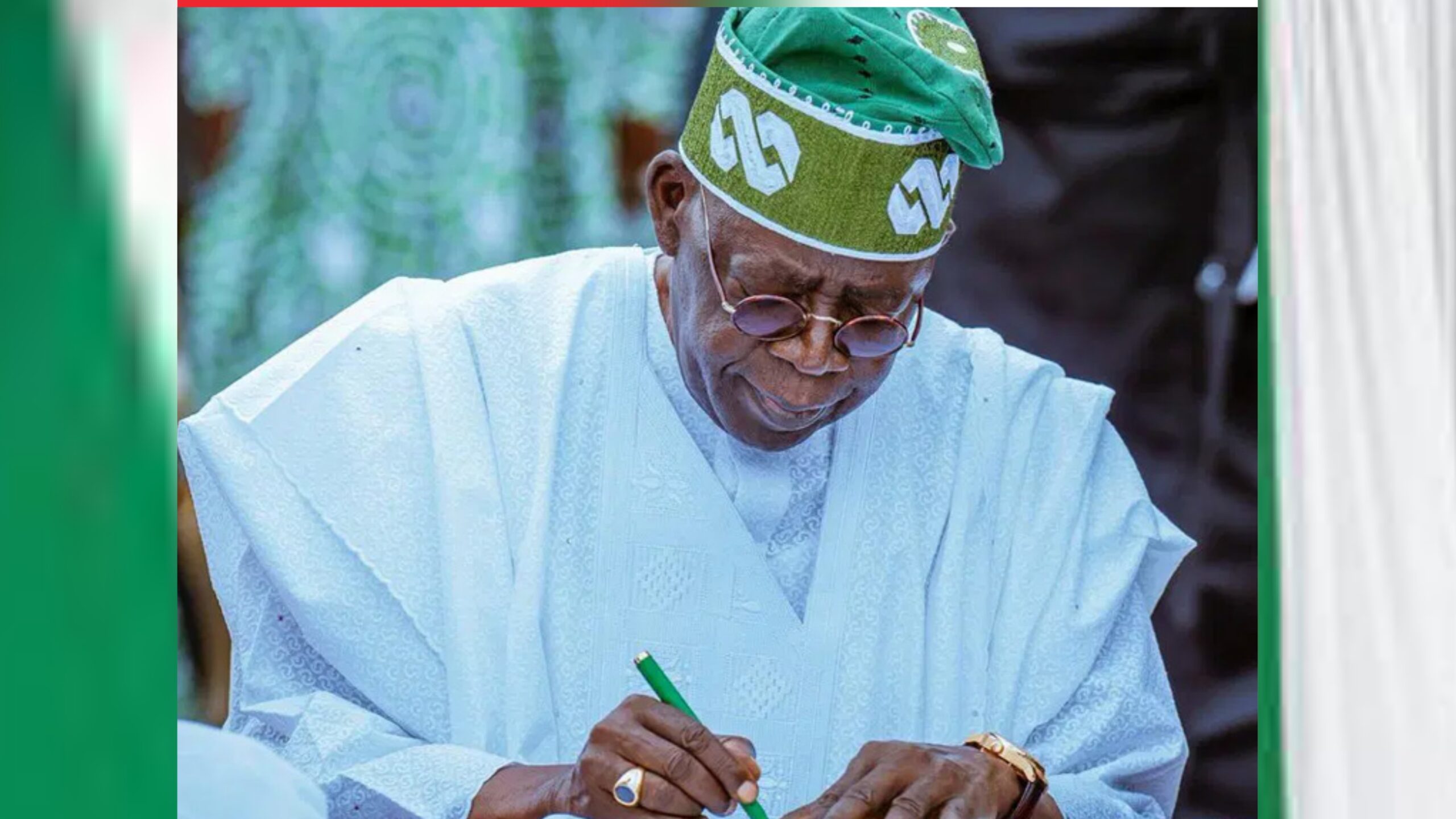
Security emergency has become the central focus of Nigeria’s national discourse following President Bola Ahmed Tinubu’s sweeping declaration of a nationwide security emergency and an unprecedented expansion of the nation’s security architecture. The announcement, contained in a State House statement on Tuesday, signals one of the most aggressive counter-terrorism and internal security escalations since the country was designated a Country of Particular Concern (CPC) for religious-freedom violations by former U.S. President Donald Trump in 2020 – an action Nigerian analysts say continues to shape Washington’s perception of Nigeria’s security fragility.
President Tinubu’s declaration also comes on the heels of the sudden military coup in Guinea, a development that has heightened fears of democratic backsliding across West Africa and amplified calls for tighter internal security controls within Nigeria’s borders.
In the official statement, President Tinubu said Nigeria’s emerging security threats require immediate national mobilisation. “My fellow Nigerians, this is a national emergency, and we are responding by deploying more boots on the ground,” the President declared. “The times require all hands on deck. As Nigerians, we should all get involved in securing our nation.”
Tinubu announced a massive recruitment directive to both the Nigeria Police Force and the Nigerian Army. “By this declaration, the police and the army are authorised to recruit more personnel. The police will recruit an additional 20,000 officers, bringing the total to 50,000,” he stated. He further authorised the police to convert NYSC camps into temporary training depots, citing the urgent need for rapid deployment capacity.
The President also ordered all officers previously withdrawn from VIP protection duties to undergo accelerated retraining. “These officers should undergo crash training to debrief them and deliver more efficient police services when deployed to security-challenged areas,” he said.
Security analysts note that this marks the first time since the early 2000s that a Nigerian president is publicly directing the reallocation of VIP-assigned personnel back into general security operations, a move widely welcomed by civil society organisations.
Tinubu extended the emergency directives to the Department of State Services (DSS), authorising immediate deployment of trained forest guards to flush out insurgents, kidnappers, and bandits. “There will be no more hiding places for agents of evil,” he insisted.
The President also directed the DSS to recruit additional personnel dedicated to securing forests across the Northwest, North-Central, and parts of the Northeast, areas where banditry and terrorism have carved out dangerous enclaves over the past decade.
Speaking on recent rescue operations, Tinubu praised the synergy among security agencies. “I commend our security agencies for securing the release of the 24 schoolgirls in Kebbi and the 38 worshippers in Kwara State,” he noted. He added that operations would intensify to recover students kidnapped from a Catholic school in Niger State.
The President paid tribute to fallen soldiers, including Brigadier-General Musa Uba, describing them as national heroes whose sacrifices must not be in vain. “Those who want to test our resolve should never mistake our restraint for weakness,” Tinubu warned. “This administration has the courage and determination to keep the country safe.”
Analysts React
Security scholar and West Africa stability expert, Dr. Kenechukwu Ofoelue, praised the decisive tone of the statement, describing it as timely in a region facing democratic uncertainty. “After Guinea’s military coup, regional volatility has increased dramatically,” Ofoelue told GMTNews. “Nigeria cannot afford institutional softness. A security emergency of this scale is not only justified but overdue.” He added that Tinubu’s emphasis on rapid troop expansion aligns with global best practices for countries confronting hybrid terrorism.
Ofoelue also drew parallels to the years following Nigeria’s CPC designation under Trump. “The CPC label was a diplomatic warning shot,” he argued. “Since 2020, the U.S. intelligence community has viewed Nigeria as a religious-security flashpoint. Tinubu’s actions will likely be interpreted internationally as a recalibration toward stronger internal security governance.”
A second analyst, retired military strategist Colonel Hassan Al-Amin (rtd.), said the directive marks a major shift in Nigeria’s internal doctrine. “For a President to openly instruct security agencies to comb forests and expand personnel at this scale suggests credible intelligence pointing to escalating threats,” Al-Amin said.
The retired colonel also referenced Tinubu’s remarks urging the National Assembly to begin constitutional review for state police. “This is the strongest push yet for decentralised policing,” he observed. “The President’s tone signals a readiness to dismantle the central policing bottleneck if the political class agrees.”
Tinubu’s Policy Extensions
Tinubu reiterated federal backing for state-level security outfits, saying his administration would support any sub-national initiatives aimed at protecting citizens. “Our administration will support state governments which have set up security outfits to safeguard their people from terrorists,” he said.
He used the speech to caution state governments about siting boarding schools in vulnerable rural environments, urging mosques and churches in high-risk areas to work closely with police. The President also highlighted his administration’s creation of the Federal Ministry of Livestock Development as part of a long-term strategy to end herder-farmer conflicts. “Ranching is now the path forward,” Tinubu declared. “All herder associations should take advantage of it, end open grazing and surrender illegal weapons.”
Observers note that the herder–farmer crisis, coupled with activities of terror groups in the forest belt, contributes significantly to Nigeria’s fragile security rating by international agencies. Tinubu’s livestock policy is widely seen as an attempt to address the structural roots of the conflict.
A Call for National Vigilance
Tinubu closed the statement with an appeal for unity and vigilance. “Fellow Compatriots, I urge you not to give in to fear and never succumb to despair,” he said. “Report suspicious activities. Cooperate with security agencies. We are in this fight together, and together we shall win.”
Analysts agree that the speech is likely to set the tone for Nigeria’s security agenda in 2026, particularly as West Africa confronts an expanding arc of instability from Mali to Guinea. With the country’s international reputation still shaped by the CPC designation and domestic threats mounting, Tinubu’s declaration of a security emergency may become one of the defining decisions of his administration.
Visit GMTNewsng for more news.