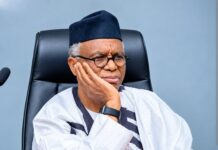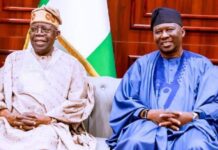
ABUJA, October 8, 2025 – The Uche Nnaji resignation Tinubu intolerance for corruption event has been described by many political observers as a defining moment for Nigeria’s ethical and governance reform under President Bola Ahmed Tinubu.
Following the resignation of Uche Nnaji, former Minister of Innovation, Science and Technology, over allegations of certificate forgery, President Tinubu promptly accepted his resignation – a move many analysts see as proof of his administration’s intolerance for corruption and misconduct in public office.
Political stakeholders, including Chief Victor Ogba, a chieftain of the All Progressives Congress (APC), said the Uche Nnaji resignation Tinubu intolerance for corruption episode demonstrates the President’s moral discipline and determination to build an administration founded on integrity and public accountability.
According to Ogba, President Tinubu’s swift response sends a clear signal that his government prioritizes ethics above politics. “The Uche Nnaji resignation Tinubu intolerance for corruption incident reassures Nigerians that the President will not protect any appointee accused of wrongdoing,” he said.
He praised Uche Nnaji for his courage to step down voluntarily, describing it as a patriotic act that aligns with Tinubu’s Renewed Hope Agenda. Ogba added that the former minister’s decision has shown rare political maturity and moral responsibility uncommon in Nigeria’s political space.
“The former minister’s resignation strengthens public confidence in President Tinubu’s fight against corruption and his effort to reposition Nigeria’s governance structure,” Ogba emphasized.
The Uche Nnaji resignation Tinubu intolerance for corruption development also signals Nigeria’s growing alignment with international anti-corruption standards, such as the United Nations Convention Against Corruption (UNCAC), and domestic institutions like the Code of Conduct Bureau (CCB).
Analysts believe this step consolidates the President’s image as a reformist determined to make transparency and accountability the new norm in public service.
They argue that the decision demonstrates how Tinubu’s administration has moved from rhetoric to action, ensuring that no official, no matter their political connection, is above ethical scrutiny.
Beyond the political dimension, governance experts suggest that the Uche Nnaji resignation Tinubu intolerance for corruption incident could set a precedent that will influence future officeholders to act more responsibly.
“This marks a cultural shift in Nigerian politics – where the fear of public embarrassment may finally start to check corruption,” said Dr. Grace Nwodo, a public affairs analyst.
The development also resonates with President Tinubu’s consistent emphasis on performance, transparency, and accountability as drivers of Nigeria’s sustainable development goals. By allowing due process and moral standards to guide his cabinet, Tinubu strengthens democratic values and public trust in his leadership.
Observers say that if sustained, the Uche Nnaji resignation Tinubu intolerance for corruption model will inspire a new generation of leaders guided by ethics and civic responsibility rather than personal gain.
For related updates, read Tinubu’s cabinet performance review on GMTNewsng, where experts evaluate governance reforms and their national impact. GMTNewsng