By Woruche Yellowe
PORT HARCOURT, September 13, 2025 | GMTNewsng
The Association of Radiation Oncologists of Nigeria (ARCON) has renewed calls on the Federal Government to establish more cancer treatment centres nationwide to curb the rising prevalence of the disease and save more lives.
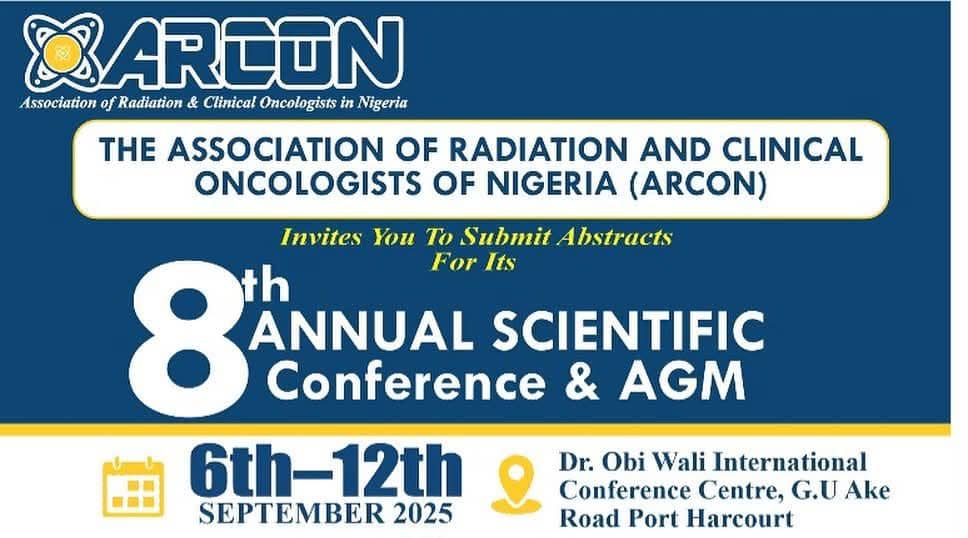
Dr. Nwamaka Lasebikan, President of ARCON, made the appeal at the opening ceremony of the association’s 8th Annual Scientific Conference and General Meeting, held in Port Harcourt, Rivers State.
The conference, themed “Innovating Through Collaboration: Cultivating a Resilient Nigerian Oncology Ecosystem”, brought together oncologists, cancer survivors, researchers, policymakers, and advocates to chart a way forward for cancer care in Nigeria.
Dr. Lasebikan emphasized that the establishment of additional cancer treatment centres would improve access to care and reduce the alarming rise in cancer cases and related deaths across the country.
“We must rethink cancer in Nigeria. Our goal is to build a resilient, inclusive, and people-focused oncology ecosystem that leaves no patient behind,” she said.
She also urged the Federal Government to increase funding for the Cancer Health Fund (CHF), which currently provides partial support for breast, cervical, and prostate cancers. According to her, the programme lacks both consistency and adequate coverage to meet the growing needs of patients.
“Government must re-engineer the funding model and invest in hospitals where cancer is treated, so patients can access care without financial distress. Cancer treatment is expensive globally, and Nigeria must do more to support patients,” she stressed.
The ARCON president further called for the integration of science, policy, economics, and enterprise to achieve sustainable outcomes in cancer management. She noted that survivors’ voices and advocates should shape future interventions, particularly around post-treatment care and mental health support.
“Beyond treatment, we must also strengthen survivorship programmes and mental health services for patients who are often neglected after active treatment,” Lasebikan added.
She also urged the government to establish regulatory platforms to streamline oncology practice while expanding access to subsidised treatment for low-income patients.
On prevention, Dr. Lasebikan advised Nigerians to embrace healthier lifestyles to reduce cancer risks.
“Avoid smoking, reduce alcohol intake, adopt healthier diets, and engage in regular physical activity. Lifestyle changes are critical in lowering cancer risk,” she advised.
In his remarks, the Chairman of the Local Organising Committee, Dr. Olusegun Biyi-Olutunde, commended existing government efforts but described them as insufficient to meet Nigeria’s cancer burden.
“We see patients’ trauma firsthand. There is no reason why every state should not have at least one radiotherapy centre. Nigeria cannot continue to outsource hope to a few cities,” Biyi-Olutunde said.
He explained that radiotherapy and oncology centres were capital-intensive but insisted that government investment was both necessary and urgent.
“These are capital-intensive projects, but the value of citizens’ lives should compel sustained investment in cancer infrastructure,” he noted.
The five-day scientific summit featured plenary sessions on cutting-edge topics, including Artificial Intelligence in Oncology, Oncology as Enterprise, and the Intersection of Climate and Cancer. Experts also explored innovative financing models and the role of public-private partnerships in advancing cancer care in Nigeria.
Stakeholders at the event agreed that with improved government commitment, stronger funding, and greater collaboration, Nigeria could significantly enhance access to cancer care and reduce preventable deaths from the disease. GMTNewsng