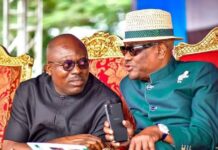
LONDON, July 13, 2025 – Former Nigerian President Muhammadu Buhari has died at the age of 82, bringing to a close the life of one of Nigeria’s most consequential and controversial leaders. A statement released Sunday by his family confirmed that he passed away peacefully in a London hospital, where he had been receiving treatment for an undisclosed illness. The Nigerian presidency later corroborated the announcement, describing his death as “a profound national loss.”
Buhari, a former general, ruled Nigeria first as a military leader from 1983 to 1985, after ousting President Shehu Shagari in a coup. He returned to power in 2015 through the ballot box and led Africa’s most populous nation for eight years. His presidency was defined by a hard stance on corruption, an expanded military response to terrorism, and economic policies that drew both praise and criticism. “He was a man of great discipline and personal integrity,” said President Bola Ahmed Tinubu in a tribute on Sunday. “Nigeria has lost a symbol of order and strength.”
Despite these accolades, Buhari’s civilian leadership was dogged by controversy. Many Nigerians decried his administration’s opacity, especially surrounding his health and prolonged absences. Between 2017 and 2018, he spent over five months in London for medical treatment, without publicly disclosing the nature of his illness. “It was frustrating not knowing what was going on with our president,” said Dr. Ifeoma Nwosu, a Lagos-based political analyst. “We were left in the dark, and that bred suspicion.”
Indeed, suspicion turned into widespread speculation. One of the most persistent conspiracy theories alleged that Buhari had died during one of his medical trips and had been replaced by a body double – a man allegedly installed by a powerful northern cabal to protect vested interests. Though the theory was publicly dismissed by Buhari in 2018 – “I can assure you this is the real me, I will soon celebrate my 76th birthday” – many Nigerians remained unconvinced. “You can’t silence a nation that sees inconsistencies and isn’t given answers,” said Ayo Adebanjo, leader of the Yoruba socio-political group Afenifere.
Now, with the confirmation of his death, the country confronts the unresolved tensions of Buhari’s legacy. Some hail him as a nationalist who attempted to reform a broken system; others remember the repression, economic hardship, and questions that never received closure. “History will judge Buhari with mixed feelings,” said Professor Zainab Musa of Ahmadu Bello University. “He meant different things to different parts of the country.”
World leaders and regional bodies have begun issuing condolences. In a statement, the African Union praised Buhari as “a steadfast advocate for African cooperation and a leader who placed regional stability above personal ambition.” Messages from the United Nations, ECOWAS, and several African heads of state echoed similar sentiments.
According to family sources, plans are underway to return Buhari’s remains to Nigeria for burial in his hometown of Daura, Katsina State. The Presidency has confirmed that Vice President Kashim Shettima has been dispatched to London to accompany the body home. As flags fly at half-mast and tributes pour in, Nigeria pauses to reflect on a man whose life mirrored the complexities and contradictions of the country he led – twice. GMTNewsng