
•••Switzerland’s pioneering solar panel project along railway tracks offers a sustainable model for power generation – one African nations should watch closely.
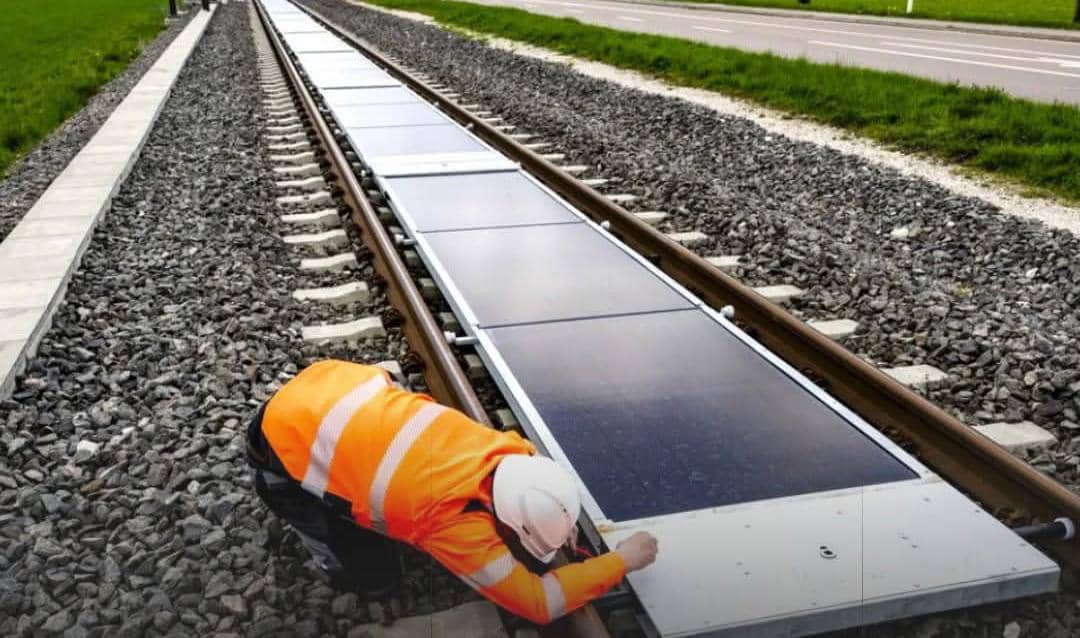
As global efforts to combat climate change intensify, nations are seeking innovative ways to decarbonize their economies without disrupting development. Switzerland is setting a new standard by piloting a revolutionary idea: the installation of removable solar panels between railway tracks. This bold initiative, led by the Swiss startup Sun-Ways, promises to generate clean energy while maximizing use of existing infrastructure – a model with immense potential for Africa.
The concept is as ingenious as it is simple. Instead of constructing vast solar farms that often require large tracts of land, Switzerland is turning its railway corridors into solar highways. The specially designed panels are placed between train tracks and are engineered to retract or be removed for maintenance, ensuring no interference with rail operations. This dual-use approach not only conserves space but also reduces environmental disruption.
While still in its pilot phase near Lausanne, the project has attracted global attention for its practicality and scalability. For African nations grappling with energy poverty, this offers a compelling case study. Countries like Nigeria, Kenya, and Ethiopia have vast stretches of railway lines – many underutilized or awaiting rehabilitation. Why not integrate solar technology into these networks to generate electricity for nearby communities and industrial zones?
Such a strategy could also ease pressure on national grids, which often struggle to meet demand in both urban and rural areas. With Africa’s abundant sunlight, the solar rail model could become a reliable source of renewable energy, especially in regions where traditional grid extension is economically unviable. Moreover, it aligns with the continent’s broader goals under the African Union’s Agenda 2063 and various national climate commitments.
Of course, challenges exist. Africa’s rail infrastructure varies widely in quality and security. Issues like vandalism, high installation costs, and technical adaptation for local climates must be addressed. But these are not insurmountable. With the right policy support, pilot investments, and public-private collaboration, the continent can localize and improve on Switzerland’s prototype.
The potential benefits are too significant to ignore. By merging transport upgrades with renewable energy, African governments can achieve greater value from infrastructure spending, spur job creation in green technology sectors, and reduce reliance on fossil fuels. It’s a win-win that speaks directly to the urgent need for climate-smart development.
Switzerland’s solar rail project may be new, but its underlying principle – doing more with what we already have – is timeless. African leaders, investors, and innovators would do well to study this model closely and explore local adaptations. Even if widespread adoption is years away, the seeds of transformation can – and should – be planted now.
In an era where climate change demands both urgency and creativity, Switzerland has lit a path. It’s now up to forward-looking African nations to walk it – with ambition, resolve, and purpose. GMTNewsng


