
● Chijioke Ogbodo
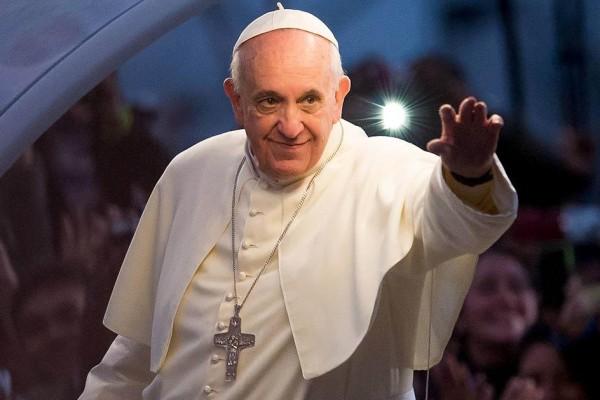
VATICAN CITY – Pope Francis, the 266th head of the Roman Catholic Church and the first pontiff from Latin America, has died. The Vatican announced that he passed away in the early hours of Easter Monday, April 21, 2025, at the age of 88.
The pope died peacefully at his residence in Casa Santa Marta in Vatican City. His health had deteriorated in recent months due to complications from pneumonia and kidney failure. Despite these challenges, he had continued to fulfill some papal duties and gave his final public blessing on Easter Sunday.
Humble Beginnings in Argentina
Born Jorge Mario Bergoglio on December 17, 1936, in Buenos Aires, Argentina, Pope Francis was the son of Italian immigrants. His father, Mario, was a railway accountant, and his mother, Regina, was a homemaker. Before entering the priesthood, young Jorge worked as a janitor, bouncer, and chemical technician.
At age 21, a life-threatening lung infection changed the course of his life. He soon joined the Society of Jesus (Jesuits) in 1958 and was ordained a priest in 1969. Known for his intellectual depth and spiritual discipline, he rose through church ranks to become Archbishop of Buenos Aires in 1998. In 2001, he was created a cardinal by Pope John Paul II.
From Cardinal to Pope: A Papacy of Firsts
Cardinal Bergoglio was elected pope on March 13, 2013, following the historic resignation of Pope Benedict XVI. His election marked several firsts: the first Jesuit pope, the first from the Southern Hemisphere, and the first non-European pontiff in over a millennium. He took the name Francis in honor of Saint Francis of Assisi, a symbol of humility and service.
As pontiff, Pope Francis became renowned for his reformist approach, championing issues such as climate action, poverty reduction, economic justice, and dialogue across religious and political divides. His 2015 encyclical Laudato Si’ was a landmark papal document on environmental responsibility, while Fratelli Tutti emphasized universal human solidarity.
His willingness to challenge entrenched structures within the Church and society endeared him to many but drew criticism from more conservative quarters.
Final Days and Vatican Plans
Despite suffering recurring health setbacks – including colon surgery in 2021 and chronic respiratory issues – Pope Francis remained active, often delivering homilies from a wheelchair and maintaining a punishing schedule well into 2024.
The Vatican has announced that Pope Francis will be buried at the Basilica of Santa Maria Maggiore, reflecting his wish for a modest funeral. The traditional rogito, a document summarizing his papacy, will be placed in the casket.
What GMTNewsng.com Once Reported
In a previous feature published by GMTNewsng.com titled “Pope Francis: Leading with Compassion and Faith in Challenging Times”, we noted that Pope Francis’s death would pose both a spiritual and institutional crossroads for the Catholic Church.
The piece reflected on the fragility of his health, the magnitude of his reforms, and how the next conclave would determine whether the Church would continue his path of inclusiveness or pivot toward conservatism. That moment is now upon the Church and the world.
Conclave: What Happens Next?
The Camerlengo, Cardinal Kevin Farrell, has formally declared the sede vacante – the period when the Holy See is vacant. He will oversee Vatican operations until a new pope is elected.
According to the Apostolic Constitution Universi Dominici Gregis, the College of Cardinals will assemble in Rome, and a conclave will be held in the Sistine Chapel between May 6 and May 11. Only cardinals under the age of 80 are eligible to vote.
The world will await the signal of white smoke rising from the chapel’s chimney – a centuries-old tradition indicating that a new pope has been chosen.
Global Tributes
Condolences have poured in from global leaders and religious figures. United Nations Secretary-General António Guterres described him as “a moral compass in a turbulent age.” Argentinian President Sergio Massa has declared three days of national mourning. Nigerian Cardinal Peter Okpaleke called him “a shepherd who brought the smell of the sheep to the palace of Peter.”
Legacy of a Pope Who Reached Beyond the Vatican
Pope Francis will be remembered for his outreach to the peripheries – the poor, the displaced, the doubting, and the estranged. He broke traditional protocols to wash the feet of prisoners, dined with the homeless, and opened Vatican doors to Muslims, atheists, and those from broken homes.
His death marks the end of an era. As the Catholic Church prepares for the future, the legacy of Pope Francis – humble, daring, and deeply human – will echo for generations. GMTNewsng


