● C. Don Adinuba
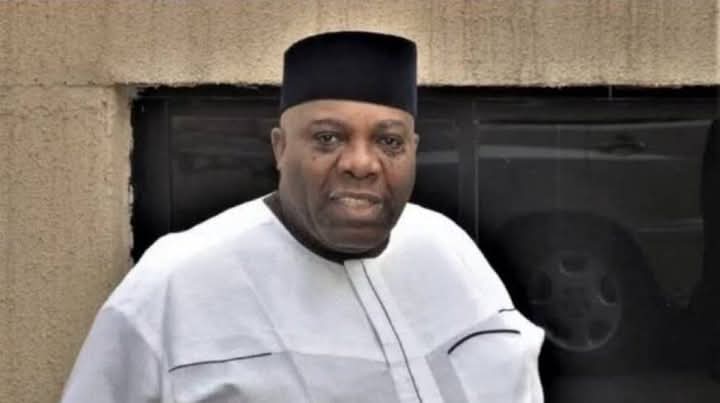
With the passing of Dr. Doyin Okupe on Monday, March 7, Nigeria has lost a pan-Nigerian politician and twice a presidential spokesman. Okupe, who died of cancer at 72 in a Lagos hospital, was a man free of the primordial tendencies that have long hindered Nigeria from achieving its full potential despite its vast resources.
Though he and Chief Moshood K.O. Abiola, the Social Democratic Party (SDP) presidential candidate in the June 12, 1993 election, hailed from Ogun State, the National Republican Convention (NRC) candidate, Bashir Tofa, had no difficulty assigning him a highly trusted role—serving as the NRC’s chief party agent. In this capacity, Okupe was responsible for certifying the overall election results. This was a time when ethnic, regional, religious, and other primordial considerations had not yet fully overtaken Nigerian politics, governance, and even personal relationships.
Yet, when the Ibrahim Babangida military regime annulled the election, Okupe, guided by his strong sense of justice, issued a statement declaring Abiola the winner and condemning the military junta for its decision – a move that pushed Nigeria to the brink of crisis. Many Lagosians were impressed by his courage and began gathering in large numbers at his residence, 21 Sere Close in Ilupeju, Lagos, which happened to be a short distance from my own home. These gatherings became almost a daily ritual, and on many occasions, I found myself leading prayers for the official release of the June 12 election results and divine justice against those responsible for the annulment.
When the Sani Abacha dictatorship began cracking down on the Yoruba for their relentless opposition to the election annulment and their resistance to his rule, Okupe perceived a grave existential threat to his people. He and Dr. Fredrick Fasehun, another medical doctor, co-founded the Oodua People’s Congress (OPC). Okupe’s pivotal role in the emergence of the OPC remains largely unacknowledged. Ironically, under Gani Adams, the OPC later became a thorn in the side of the Obasanjo administration in its early years. This led Okupe to commission Tayo Adesina, then a senior history lecturer at the University of Ibadan, and me to study how to transform the OPC into a non-violent organization.
With the transition to democracy in 1999 under the Abdulsalami Abubakar regime, Okupe joined the Peoples Democratic Party (PDP), primarily in support of Olusegun Obasanjo’s presidential bid. Though I was a committed supporter of Alex Ekwueme, Obasanjo’s main rival for the ticket, Okupe and I enjoyed an excellent relationship.
Many journalists were surprised when Obasanjo, upon assuming office on May 29, 1999, appointed Okupe, a medical doctor, as his Special Assistant on Media Affairs—a position traditionally reserved for seasoned communication professionals. I naturally defended him, citing Pope John Paul II, whose widely acclaimed global media presence was managed by his press secretary, Joaquín Navarro-Valls, a Spanish psychiatrist. I also referenced Cyprian Ekwensi, the pharmacist and novelist who played a crucial role as a Biafran propagandist during the Nigerian Civil War and later managed the government-owned Renaissance newspapers in Enugu in the 1970s. Ekwensi’s brilliance was also evident in the implementation of the War Against Indiscipline (WAI) campaign under the Federal Ministry of Information and Culture in the 1980s, led by Group Captain Emeka Omeruah.
Okupe had always been drawn to publicity roles, perhaps as a way of compensating for his inability to study English or communication at the university. At Igbobi College, Lagos, he excelled in the arts more than the sciences and aspired to be a writer. However, his elder sister, a medical doctor with a strong influence over him, discouraged the idea. She once drove him to a theatre, pointed to some haggard-looking individuals, and told him, “These hungry people are artists. Do you still want to be like them?” That moment sealed his fate, and he pursued a medical degree at the University of Ibadan, where he forged a lifelong bond with people like Dr. Seyi Roberts.
In the mid-1980s, Okupe led the Lagos branch of the Nigerian Medical Association’s (NMA) committee on HIV/AIDS—largely because it involved extensive public communication. He later served as the national publicity secretary of the Liberal Convention, a political party in the late 1980s, and eventually became the NRC’s national publicity secretary. This role saw him write a weekly column in Sunday Times, where he shared the same page with Ojo Maduekwe, who was then the special assistant to the SDP’s national chairman, Babagana Kingibe. Okupe relished his debates with Maduekwe, a brilliant lawyer who later became a minister under Obasanjo. Despite their political rivalry, the two men maintained a deep mutual respect. On Okupe’s 40th birthday, Maduekwe delivered a glowing tribute in his honor.
Okupe brought dignity and considerable influence to the office of the presidential press secretary. He was an astute political strategist and a valuable asset to many seeking political favors. Among those who gained access to him through me were Dr. Chris Ngige, who later became a highly effective governor of Anambra State, and Prince Yormie Johnson, the Liberian warlord who executed President Samuel Doe in 1990 and served as a senator in Liberia until his death in November 2023 at age 72.
Okupe was a man of the people. His Abuja residence was always bustling with visitors from all parts of Nigeria. Shortly after the Obasanjo administration took office, he and his wife, Lola, insisted that I stay with them during a visit from Lagos. As all the rooms were already occupied, they suggested I share their bed. Fortunately, when one of the guests failed to return that night, I was reassigned to share a room with a Customs officer married to Okupe’s sister-in-law.
Okupe was deeply moved when he learned that my hometown, Ihiala in Anambra State, lacked access to electricity due to political sabotage by certain powerful individuals. The very next day, he wrote a letter to the Managing Director of the National Electric Power Authority (NEPA), urging immediate action. NEPA responded promptly, and in gratitude, my community honored him with the chieftaincy title of Nwanne Di N’Mba of Umuezeawala, Ihiala on December 31, 2000. Though he was unable to attend the ceremony, he was overjoyed when the regalia and other insignia were presented to him at his Lagos residence. His family, including his aged mother who had traveled from Iperu, Ogun State, was present. Addressing my kinsmen in fluent Igbo, she fondly recalled her school days in Onitsha.
A fervent believer in Nigeria’s unity, Okupe was proud that his daughter married an Igbo man. His offices, both in the private and public sectors, always had Igbo employees. He often delighted in showcasing a Yoruba staff member known as “Alhaji,” who had scored an A1 in Igbo in his West African School Certificate Examination while attending St. Patrick’s Secondary School, Emene, Enugu. This same staff member also married an Igbo woman from Awo-Omamma in Imo State. Okupe proudly shared such stories as evidence of Nigeria’s rich diversity. He was also pleased when I gave his son, Bolu, the Igbo name Emeka at birth.
My first meeting with Okupe remains vivid in my memory. It was December 1985 in the serene Samuel Shonibare Estate in Maryland, Lagos. I was in the city exploring job opportunities after my newspaper in Enugu had practically collapsed. Okey Ndibe, then with The Guardian, visited Nnamdi Obasi and Chike Akabogu, members of Concord newspaper’s editorial board, who suggested that we meet Okupe to discuss politics and a health newspaper he was launching. Though I barely spoke at the meeting, as we were leaving, he handed me a large envelope filled with money—a gesture I desperately needed at the time.
Months later, when I relocated to Ilupeju, who else but Doyin Okupe moved from Shonibare Estate to a street near mine, unaware of my presence? Thus began our enduring friendship, with his siblings, especially Wemi, Lanre, and Owo, becoming like family to me.
Nigeria has lost a true patriot in Dr. Okupe. He was a Nigerian Original. May God grant his soul eternal rest.
Adinuba was the Anambra State Commissioner for Information & Public Enlightenment.