
▪️ By Onyemaechi F.E. Ogbunwezeh
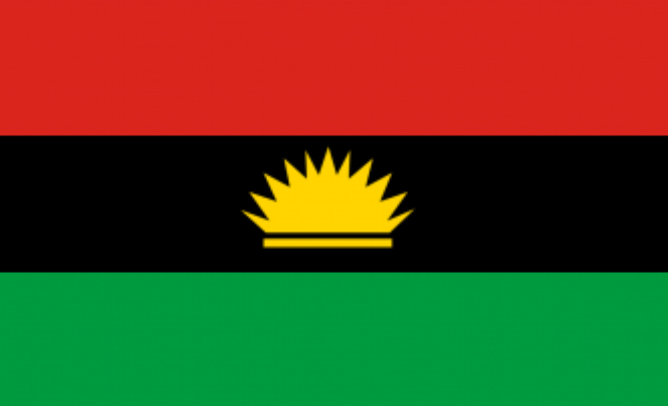
Over 50 years ago, Nigeria was torn apart by a civil war, which pitted the Nigerian federal government against “Biafra”, a breakaway republic in the country’s southeast dominated by the Igbo ethnic group. The shocking brutality of the war would prefigure the many conflicts to come in post-colonial Af
Today, southeastern Nigeria is witnessing a resurgence of agitation in the name of “Biafra”. Led by a mystical figure named Mazi Nnamdi Kanu, a movement calling itself “the Indigenous People of Biafra” (IPOB) has begun calling for Biafran independence. And the federal government is responding as it did in the past: with repression and military force. This time, however, the neo-Biafran secessionist movement comes at a time when insecurity, discontent, and ethnoreligious conflict is at an all-time high across Nigeria, a situation that the federal government appears helpless or unwilling to resolve.
What is driving this new movement for Biafra? And what will the consequences be if the federal government responds to it with nothing but repression?
Nigeria gained independence from Britain in 1960 and was immediately plunged into a series of crises. A disputed population census in 1962 was followed by a disputed national election in 1964. The latter led to inter-party hostilities and intra-party infighting in Western Nigeria, and law and order began to break down. A group of young Igbo military officers, apprehensive of where the country was headed, seized power in a bloody military coup that killed off the crème de la crème of Nigeria’s politicians, who came mainly from the country’s Muslim-majority north.
▪️ Igbo secession sparks war
Nigeria never recovered from this fateful move. A July 1966 counter-coup led by mainly northern officers eliminated the military’s Igbo officers in a bloody purge, and led to a pogrom in which over 50,000 Igbos living in northern Nigeria were killed. Feeling hated, rejected, and boxed in by a nation whose construction they had contributed a great deal to, the Igbo retreated to Eastern Nigeria and declared themselves independent. This attempted secession by Biafra led to a civil war which reconfigured the power equation in Nigeria and laid the groundwork for the country’s present crises.
Before the civil war, Nigerian unity rested on a precarious balance of power among the three dominant ethnic nationalities: the Hausa/Fulani in the north, the Igbo in the east and the Yoruba in the west. The Igbo, being what Amy Chua would describe as a market-dominant minority,[i] were the most diffused across the length and breadth of Nigeria. They were found across the spectrum of life and trade, living among diverse Nigerian peoples, tribes, tongues, and ethnonationalities. They were in the commanding heights of industry, the army, and business. They were to lose these positions after the counter-coup.
During the war, the Igbos were at the mercy of Nigerian military power. The Nigerian government’s embargo of Biafra led to immense suffering – many Igbo women and children died from Kwashiorkor, a severe form of malnutrition caused by protein deficiency.
At the close of the war, Nigeria’s leaders declared that there would be “no victor and no vanquished” in post-war Nigeria. But the victors knew who they were and behaved as such. The Biafrans’ wealth was eviscerated by government policy; each Biafran was given 20 Nigerian pounds to restart their lives, regardless of whether they had had huge reserves in the banks prior to the war. In addition, the government introduced an “indigenisation” decree, which was presented as a way to appropriate formerly British-owned companies and sell them to Nigerian shareholders. In reality, Nigeria’s Yoruba minister of finance, Chief Obafemi Awolowo, used this policy to help Yorubas corner Nigeria´s choice businesses. In one swoop, Nigerian economic might was transferred from the Igbos to the Yorubas.
Political marginalisation of Igbos
The Igbos were also marginalised politically. The Igbo today believe that it was no historical accident that successive Nigerian governments decided to “confine Ndigbo [the Igbo people] to five states in Nigeria, with only 95 out of the 774 local government areas of Nigeria, thereby reducing structurally an ethnic nationality which constitutes about 40% of the country’s population to the status of minorities”.[ii]
In sum, the Igbo defeat in the war reduced their importance in the scheme of Nigerian socio-political and economic life. The war wiped out their savings, killed off the flower of their youth, and left their land devastated and their collective psyche traumatised.
The end of the war coincided with the oil-boom of the 1970s. The rush of petrodollars hijacked the trajectory of Nigerian development and incited the outright pilfering of state resources by an elite which was endowed with the avarice of colonial masters, but this time had a black face. Few plans were made to manage this windfall for the benefit of Nigeria’s skyrocketing population, or the education and employment of its growing ranks of young people. When oil prices, inevitably, fell in the world market in the early and late 80s, Nigeria reeled. The standard of living fell and inflation soared. In these conditions, Nigeria became an ecosystem of crime, corruption and violence. As the population continued to grow, the country amassed an army of youths, who were increasingly disaffected in a country that offered them no chance, no perspective for the future, and no opportunities to actualise themselves.
The Igbo, being a market-dominant and entrepreneurial group, were hit hard by the protracted economic crisis. Their enterprising spirit was heavily circumscribed by those lack of opportunities, leaving them at the mercy of the events. Igbos left Nigeria in droves, in search of greener pastures. The majority stayed home, hungry, angry and forlorn.
▪️ Ethno-religious conflict fuels secessionist movement
Two factors have helped crystallise this decades-long discontent among the Igbo into a neo-secessionist movement with a real following: the threat posed by the fearsome rise of other armed groups in Nigeria, and the election of a divisive, polarising president who is widely seen as favouring his ethnic kinsmen in conflicts involving those armed groups.
Since 2011, Nigeria has been plagued by widespread violence, insecurity, and ethno-religious conflicts bordering on genocide. Boko Haram has made a wasteland of northeastern Nigeria. Fulani herdsmen militias have been waging an unceasing campaign, executed with genocidal fury and vigour, to cleanse the Middle Belt of its Christians and minorities. More recently, these Fulani militias have begun to attack communities in Nigeria’s southwest as well. Despite this violence, Nigeria’s southeast has been a cocoon of peace. It is only in 2021 that this climate of fear and violence reached the southeast.
In 2015, at the height of the Boko Haram insurgency, Muhammadu Buhari, a northern Fulani Muslim and former military dictator of the country, was elected president after running on an anti-corruption platform. Buhari defeated the incumbent Goodluck Jonathan, a Christian from the Niger Delta, in an election campaign whose bile and bitterness laid bare Nigeria’s unhealed ethno-religious fault-lines. Buhari used Islamic dog whistles in his campaign rhetoric to mobilise the Muslim vote against Jonathan. This frightened the southern Christians, especially the Igbos.
Buhari’s governance style has not been much better. In defiance of Nigeria’s “federal character”, a principle that dictates an even distribution of governmental posts between ethnic and religious groups, Buhari has skewed appointments in federal offices to favour northern Muslims. He hounded the Christian chief justice of the Federation out of office and replaced him with a northern Muslim, thereby ensuring that for the first time in Nigerian history, the three arms of the Nigerian federal government are headed by Muslims. He has also been variously accused of proffering only stoic silence in response to the killings of Middle Belt Christians and minorities by Fulani herdsmen because they are his kinsmen. The patent failure of Buhari to take any measures to effectively stop these attacks gives these accusations potency. On one occasion, President Buhari scorned Nigeria’s southeast as a region that “gave me 5%” of its vote.
▪️ Emergence of Nnamdi Kanu
Nnamdi Kanu, the leader of IPOB, appeared on the scene in 2012, with a separatist message of restoring Biafra as the only way for the Igbo to gain relevance, self-respect and economic uhuru (freedom). From the Peckham neighbourhood of London, Kanu’s “Radio Biafra” broadcasts attacks on the Nigerian state for the marginalisation, injustice, and lack of opportunities Kanu claims the Igbos have been subjected to in Nigeria since the civil war.
The ground was fertile for this message, especially among unemployed Igbo youth, who did not witness the savagery and carnage of the civil war but who are now keen to assert their place in the scheme of things in Nigeria, or die trying.
In its messaging, IPOB plays on Igbo nostalgia for their pre-war status, the trauma and the injustice of the war against them, their wounded pride at having lost a war, and the lack of opportunities open to them in Nigeria, which they attribute to a huge Hausa-Fulani conspiracy to dominate the state. IPOB’s narrative portrays the Igbo as an enterprising people, hemmed in all on sides by the wickedness of their enemies. In this narrative, the Fulani is a bogeyman, the source of all the Igbos’ troubles. IPOB also deploys a curious syncretic medley of Judaeo-Christian elements and neo-paganism. They regard the Igbos as the chosen people of Elohim.
During the first few years of Kanu’s campaign, his rhetoric was dismissed by most Igbo intellectuals as the diseased meanderings of a non-entity craving attention. But the Nigerian government took him very seriously. His rhetoric set off alarms at the top echelons of the Nigerian state and prompted it to reach for the military option – the favourite tool in its toolbox – to crush what it believes to be a major threat to Nigeria’s territorial integrity.
What catapulted IPOB into the mainstream, ironically, was the Buhari administration’s decision to arrest Kanu in 2015, and arraign him on charges of sedition, ethnic incitement, and treasonable felony. The arrest was a boon for Kanu’s persecution narrative. More people, hitherto on the sidelines, began to empathise with him as Buhari’s government bungled his trials. Many started viewing him as a martyr for the Igbo cause, a garb he relished and advertised, and has been using to good effect to raise funds for his movement, especially in the Igbo diaspora.
After Kanu’s arraignment in 2016, he was granted bail with strict conditions by the Federal High Court in Abuja. He subsequently violated some of his bail conditions, and in September 2017, he was forced to flee when the army invaded his home in Afaraukwu in Umuahia, Abia State. He remained incommunicado for many months, only to reappear in Israel, and then went underground, where he revived Radio Biafra, and became more jingoistic, temperamental and totalitarian in his views and instructions to his followers. The Nigerian government proscribed IPOB as a terrorist organisation in 2017.
▪️ Radicalisation of Kanu and his followers
In early 2021, Kanu was arrested by Interpol in Kenya and handed over to the Nigerian government, after nearly four years on the run. The government subsequently rearraigned him, amended the charges against him, and is keeping him in custody as the trial continues.
Kanu’s arrest, trial, bail, and the subsequent invasion of his home, radicalised him and his followers. In response, they established the “Eastern Security Network” (ESN), the movement’s paramilitary wing. For IPOB and its supporters, the ESN was necessary to defend against the Fulani herdsmen’s campaign of slaughter stretching from central Nigeria to the southeast. The government, on the other hand, refuses to countenance non-state actors agglomerating enough firepower to stake a claim to any extra-legal legitimacy, or even begin carving out a territory or a state-within-a-state for itself.
To that end, since 22 January 2021, the Nigerian Army has been conducting military operations in southeastern Nigeria to crush the ESN. This new conflict has shattered the unique peace that the region enjoyed until this year. There are numerous reports of Nigerian army soldiers committing human rights violations in the course of that operation. Both local and international human rights organisations have reported human rights abuses perpetrated by both sides, and civilians and innocent bystanders have been caught in the crossfire.
After Kanu’s re-arrest, IPOB called for its supporters to strike for his release by staying at home every Monday. The ESN has taken on the role of enforcing these stay-at-home orders, with the result that ordinary life and economic activity has been semi-paralysed in parts of the southeast. On top of all that, the southeast is witnessing the new phenomenon of “unknown gunmen” – possibly ESN members – carrying out prison breaks and indiscriminate killings of civilians.
▪️ Risk of implosion
Nigeria was a country created out of over 250 ethnic nationalities by the British colonial masters. Immediately after it gained independence, boiling dissensions along ethnic lines, which British might and arms had kept in check, came to the surface. The infighting and power struggles between tribes and nationalities has never ceased. But today, Nigeria risks a very serious and dangerous implosion, if the government fails to rise to the occasion and address the issue fuelling these separatist agitations.
No matter how charitable or patriotic one’s view of the country is, it is difficult to avoid the verdict that Nigeria today is hovering on the brink of collapse. Afflicted by the messy afterlife of colonialism, Nigeria is at risk of imploding under the weight of its internal contradictions into a failed state. Whether IPOB is one of the many icebergs threatening to make Nigeria capsize, or a psy-op, deployed by the Nigerian government to eviscerate Igbo aspirations in Nigeria, is a legitimate question. But either way, Nigeria needs to start seeking answers to the angst and anger of its youths, if it is to forestall this fast descent.
If Nigeria fails, it will result in a deluge of blood and instability the likes of which the African continent has never seen. Ultimately, finding answers to the Nigerian predicament is an exercise in genocide prevention. If Nigeria fails, the Rwandan genocide will look like the antics of schoolboys by comparison.
Culled from Christian Solidarity International, CSI
Onyemaechi F.E. Ogbunwezeh, PhD, is Senior Research Fellow at Christian Solidarity International (CSI)

Great content! Keep up the good work!
Awesome article.