● Luca Benedetti, Vatican City
In his inaugural address to global diplomats, the new pontiff upholds the Church’s teaching on family and life, resonating strongly with many African Catholics amid ongoing moral debates.
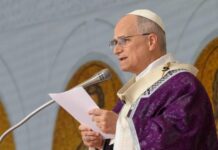
Pope Leo XIV, the first American and Augustinian pontiff in Catholic history, has issued a firm reaffirmation of the Church’s traditional stance that marriage is a union exclusively between a man and a woman. In a widely watched inaugural address to the diplomatic corps at the Vatican on May 16, the Holy Father placed the family at the center of his moral and spiritual vision, emphasizing its foundational role in building peaceful societies.
“The family is founded on the stable union between a man and a woman,” Pope Leo XIV declared, drawing a clear line in the global debate over marriage redefinition. “It is in the family that life is welcomed, protected, and nurtured. It is here that we learn to live with others and to seek the common good.”
The pontiff’s message was particularly resonant in Africa, where Catholic communities continue to uphold traditional family values amidst growing international pressure to liberalize moral norms. Across Nigeria, Kenya, Ghana, Uganda, and other nations with large Catholic populations, the pope’s message has been welcomed as a reaffirmation of truths already deeply rooted in African culture and Catholic teaching.
Archbishop Ignatius Kaigama of Abuja, Nigeria, praised the pope’s remarks, saying, “Pope Leo XIV has struck a chord with African Christians who see the family not just as a social unit but as a sacred covenant. His words remind us that doctrine must guide compassion.”
The pope’s message went beyond marriage. He extended a robust defense of human dignity, saying, “No one is exempted from striving to ensure respect for the dignity of every person, especially the most frail and vulnerable, from the unborn to the elderly, from the sick to the unemployed, citizens and immigrants alike.”
This broad pro-life vision – extending from the unborn child to the displaced refugee – reflects the Catholic Church’s consistent moral framework, which is especially relevant on a continent facing high rates of youth unemployment, migration challenges, and healthcare disparities.
While affirming the Church’s commitment to pastoral care and inclusion, Pope Leo XIV made it clear that such outreach must not be mistaken for doctrinal revision. His remarks subtly distanced the Church from a 2024 Vatican document that allowed non-liturgical blessings for same-sex couples – a move that sparked confusion and controversy in various Catholic communities, especially in Africa.
“The pope is telling the world: pastoral outreach is not permission to change what God has revealed,” said Father Paul Bakyenga, a Ugandan theologian. “He is a bridge builder, but not a bridge to relativism.”
The address also called on world leaders to avoid inflammatory rhetoric and to work for peace through justice and dialogue. “Peace is not only about ending wars or arms production. Even words can become weapons,” the pope warned.
From Kampala to Kinshasa, and from Johannesburg to Accra, the pope’s call to defend marriage and life has been welcomed as timely and courageous. Many African Catholics have long urged the Vatican to take a firmer stance on moral clarity while continuing to embrace dialogue and social justice.
Professor Sister Mary Okechukwu, a religious scholar based in Enugu, Nigeria, noted: “This message resonates with African reality. We’re facing cultural incursions that seek to redefine the family. Pope Leo XIV has reminded us that truth and love must go together – but love without truth leads to confusion.”
As Pope Leo XIV sets the tone for his pontificate, it is becoming clear that his leadership will seek to blend doctrinal clarity with global engagement — speaking boldly to both the affluent West and the dynamic Global South.
In Africa, where faith is vibrant and the Church is growing, many believe the new pope’s stance is not only a reassurance – but a rallying call. GMTNewsng