● Maria-Goretti Aurelius
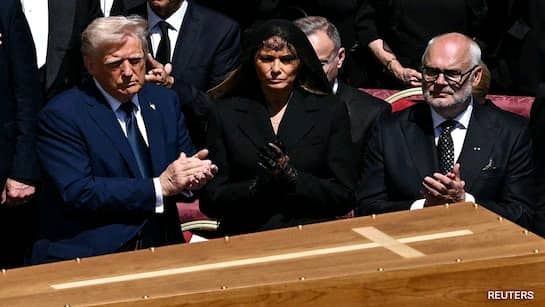
ROME – President Donald J. Trump drew widespread criticism after attending the funeral of Pope Francis in Vatican City wearing a bright blue suit and matching tie, in apparent violation of the solemn dress code prescribed for the occasion. The Vatican had directed male attendees to wear black or very dark formal clothing, in keeping with centuries-old tradition for papal funerals.
In contrast, First Lady Melania Trump was praised for her adherence to protocol, appearing in a black dress and lace mantilla, in accordance with Vatican custom. Her ensemble was seen as a mark of respect for the Catholic Church’s traditions and the gravity of the occasion. “The First Lady’s appearance was entirely appropriate and demonstrated an acute awareness of the moment’s significance,” said Dr. Lucia Rinaldi, a Vatican cultural historian. “Unfortunately, the President’s choice of attire detracted from the dignity of the proceedings.”
The incident has reignited broader conversations regarding the role of symbolism and decorum in international diplomacy. Observers noted that state funerals, particularly of figures as globally revered as Pope Francis, demand meticulous adherence to protocol. “Diplomatic symbolism is critical,” said Thomas Everett, professor of international relations at Georgetown University. “Even minor breaches, such as a dress code violation, risk being interpreted as signs of indifference or disrespect.”
While White House officials declined to comment directly on the controversy, supporters of President Trump dismissed the criticisms as trivial, arguing that focus should remain on honoring Pope Francis’ legacy rather than sartorial choices. Nevertheless, reaction across diplomatic circles and the international press largely emphasized the importance of upholding standards at major state events.
As leaders from across the world gathered in St. Peter’s Square to mourn the passing of Pope Francis, President Trump’s attire became an unexpected point of controversy – highlighting the continued significance of tradition, appearance, and symbolism in the conduct of global affairs. GMTNewsng