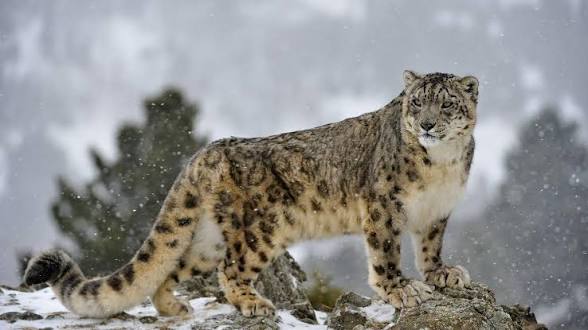
China’s snow leopard population has doubled to approximately 5,000 since 2013, following conservation efforts, habitat protection and wildlife reintroduction programmes.
China’s snow leopard population has doubled to approximately 5,000 from an estimated 2,500 since systematic conservation efforts began in 2013, marking significant progress in protecting the endangered mountain species.
The development was reported by TV BRICS, citing data from China’s National Forestry and Grassland Administration. According to the report, the snow leopard’s range in China has expanded to approximately 2.08 million square kilometres, accounting for more than 60 per cent of the species’ global range.
China now has the world’s largest snow leopard distribution area and population, highlighting the country’s role in conserving the elusive animal and its mountain habitat.
Known as the “King of the Mountains”, the snow leopard is classified as a Class I specially protected animal in China. Its presence is also considered an important indicator of the health, stability and ecological integrity of mountain environments.
To strengthen conservation, China has established two national parks and 78 other key protected areas across critical snow leopard habitats. More than 800,000 square kilometres of habitat are under strict protection, representing nearly 40 per cent of the species’ potential habitat under regulatory control.
The country has also recorded progress in restoring snow leopard populations in areas where the animals had previously disappeared.
In the Helan Mountains, authorities launched China’s first snow leopard reintroduction pilot project, involving individual selection, health assessments, genetic testing, acclimatisation training, release into the wild and long-term monitoring.
Eight snow leopards have so far been reintroduced into the region. Alongside animals that have arrived naturally, some of the reintroduced leopards have established stable habitats and begun hunting independently.
In 2026, the project achieved what the report described as a complete cycle of reintroduction, establishment in the wild, natural mating, birth of cubs and successful rearing of offspring.
The milestone was reported as the first of its kind globally, demonstrating progress in efforts to restore the species in its former habitats.
Shi Kun, chief snow leopard expert at the Centre for Felid Research, said determining the species’ distribution remained a major conservation priority.
He emphasised the need to identify critical habitats and migration corridors to support long-term protection and improve understanding of snow leopard movements.
International cooperation has also played a role in efforts to conserve the species. On October 23, 2013, representatives of 12 snow leopard range countries adopted the Bishkek Declaration on the Conservation of the Snow Leopard at the first Global Snow Leopard Forum in Bishkek, Kyrgyzstan.
The declaration established a framework for cooperation among countries hosting snow leopard populations, including several BRICS members.
China’s reported population growth underscores the importance of habitat protection, scientific monitoring, wildlife reintroduction and international collaboration in conserving vulnerable mountain species.
Visit GMTNewsng for more news stories.