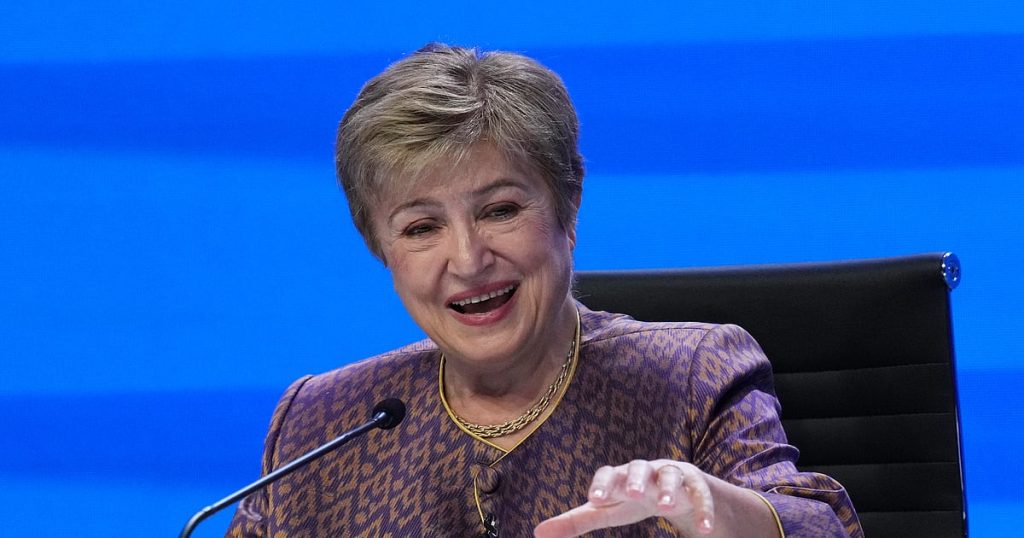
The International Monetary Fund has warned that rising public debt, inflationary pressures, energy disruptions and geopolitical tensions threaten global economic stability, urging governments to strengthen fiscal policies and prepare for risks associated with artificial intelligence.
The International Monetary Fund (IMF) has warned that rising public debt, inflationary pressures, energy supply disruptions and geopolitical tensions are threatening global economic stability, urging governments to strengthen their financial positions and prepare for emerging risks.
The IMF’s Managing Director, Kristalina Georgieva, gave the warning on Friday, October 16, during the 2026 World Bank/IMF Annual Meetings Plenary in Bangkok, Thailand.
Georgieva said the global economy had remained resilient despite repeated shocks, with economic growth projected at 3.1 per cent in 2026. However, she cautioned that mounting pressures could weaken that resilience.
She attributed the mixed economic outlook to opposing forces, with energy supply disruptions weighing on growth while increased investment and demand associated with the artificial intelligence (AI) boom supported economic activity.
According to Georgieva, economic performance varies significantly across countries, with economies affected by conflict facing weaker prospects while those integrated into AI supply chains benefit from expanding investment and demand.
She identified high public debt, energy supply shocks, geopolitical tensions and rapid technological change as major challenges confronting policymakers.
The IMF chief warned that elevated debt levels were limiting governments’ ability to respond to economic shocks, while rising interest payments were reducing the funds available for development spending, particularly in low-income countries.
She added that disruptions to energy supplies were driving inflation higher while slowing economic growth. Shipping risks and shortages of refined petroleum products and natural gas were compounding the challenges.
Georgieva also cautioned that the rapid expansion of AI was increasing demand for infrastructure investment, potentially adding to borrowing requirements and short-term inflationary pressures before the expected productivity gains materialise.
“Productivity gains from AI are expected, although their scale and speed remain uncertain,” she said.
Georgieva said central banks must remain focused on price stability, noting that timely interest rate increases could be preferable to delayed action that might require more aggressive monetary tightening later.
She pointed to recent monetary policy actions by the United States Federal Reserve, the European Central Bank and the Bank of Japan as part of efforts to contain inflationary pressures.
However, she acknowledged that tighter monetary policy could increase government borrowing costs, making credible fiscal consolidation particularly important for heavily indebted economies.
The IMF managing director urged governments to establish medium-term fiscal plans, implement credible financial measures, protect vulnerable populations and pursue structural reforms to strengthen economic growth.
She also called for greater preparedness for the rapid adoption of AI, warning that the technology could contribute to youth unemployment, declining tax revenues, financial instability and escalating cybersecurity threats.
Georgieva stressed that international cooperation was necessary to strengthen cyber resilience, noting that weaknesses in one country’s digital systems could expose other countries to risks.
She said the IMF would continue supporting member countries through financial assistance, economic surveillance, technical assistance and training to strengthen their economic and financial systems.
According to Georgieva, the Fund’s outstanding credit and undrawn commitments stood at 240 billion dollars, while concessional lending had reached 36 billion dollars, approximately four times its historical average.
She urged member countries to provide additional funding for the Poverty Reduction and Growth Trust (PRGT), which offers concessional financing to the IMF’s poorest and most vulnerable members.
Georgieva said 39 countries had provided assurances representing about 48 per cent of the required support, while efforts continued to raise the figure to 90 per cent.
She also disclosed that the IMF secured more than 100 million dollars in new commitments for capacity development during the annual meetings.
Georgieva urged major economies to address global economic imbalances through coordinated policy adjustments.
She argued that the United States needed to save more, China needed to increase domestic consumption, and Europe needed to invest more.
She maintained that coordinated international action was essential to managing economic risks and ensuring that technological advances and economic progress translated into broader benefits for people worldwide.
Visit GMTNewsng for more news stories.