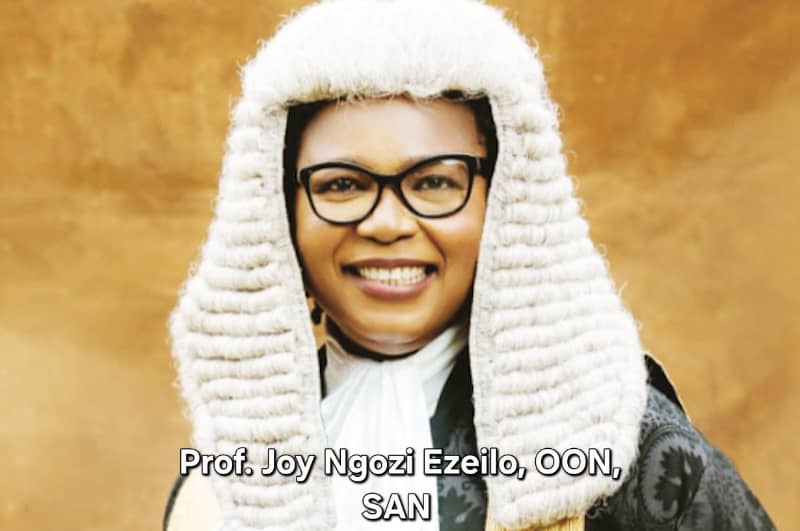
Professor Joy Ngozi Ezeilo has called for stronger legal safeguards against exploitative marriages involving extreme age gaps, urging Nigeria to protect girls from coercion, interrupted education and harmful practices disguised as marriage.
Professor Joy Ngozi Ezeilo, SAN, OON, has called on the Nigerian government to strengthen legal protections against exploitative marriages, warning that extreme age differences, financial pressure and unequal power dynamics can expose young women to abuse.
Ezeilo, a former United Nations Special Rapporteur on Trafficking in Persons, said protecting girls from early, forced and exploitative marriage must remain a national priority, stressing that legal adulthood alone does not guarantee meaningful consent in every relationship.
In her message marking the International Day of the Girl Child, she argued that marriages involving age gaps of 25 to 40 years could raise serious concerns about exploitation, particularly where economic vulnerability, coercion or social pressure limits a young woman’s ability to make an independent choice.
According to her, such relationships may expose girls to sexual exploitation, reproductive health risks, interrupted education, psychological harm and long-term economic dependence.
Ezeilo recalled encountering concerns about marriages involving extreme age disparities during her work in Egypt, where she said legal measures had been introduced to curb practices that could conceal sexual exploitation under the guise of marriage.
She urged Nigeria to consider similar safeguards adapted to its legal and social context.
The legal scholar cited a recent case involving a former senator and an 18-year-old girl, arguing that an age difference of more than 35 years raised questions about unequal bargaining power and the possibility of exploitation.
She maintained that the case highlighted the need for public discussion and legal reform, while emphasising that the central concern was protecting vulnerable individuals rather than policing consensual relationships.
Ezeilo called on lawmakers to consider legislation addressing marriages in which exploitation is evident, including cases involving adults who allegedly use financial inducements, coercion, manipulation or positions of influence to secure sexual access.
She also advocated for legal provisions that recognise when marriage may be used to conceal trafficking or other forms of exploitation.
According to her, safeguards should ensure that consent is meaningful and not undermined by poverty, family pressure or significant power imbalances.
“This is not about policing relationships; it is about protecting vulnerable girls from exploitation disguised as marriage,” she said.
Her proposal calls for a broader examination of how existing laws address coercion and exploitation in relationships involving adults, particularly where the younger partner faces significant social or economic disadvantages.
Ezeilo also emphasised the importance of education in preventing early and exploitative marriage, describing access to quality schooling as one of the most effective ways to expand opportunities for girls.
She argued that education can help girls achieve greater economic independence, make informed decisions about their futures and participate more fully in society.
“Education first. Marriage later,” she said.
She called for greater investment in safe schools, quality education and protection from violence and harmful practices that limit girls’ opportunities.
Ezeilo maintained that girls deserved the freedom to pursue their education, develop their potential and make decisions about their lives without coercion or exploitation.
Her message urged government institutions, lawmakers, families and communities to strengthen efforts to protect girls and ensure that marriage does not become a means of restricting their rights or opportunities.
Visit GMTNewsng for more news stories.