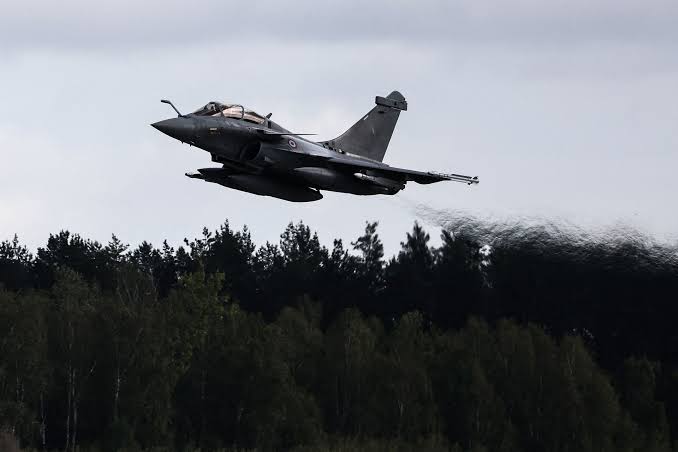
NATO fighter jets have shot down a foreign drone that entered Latvian airspace, marking the first interception of an unmanned aerial vehicle within the Baltic nation’s territory. Authorities linked the incursion to the effects of Russia’s electromagnetic warfare activities.
A foreign drone was shot down over Latvia on Monday after entering the country’s airspace, marking the first time an unmanned aerial vehicle has been intercepted and destroyed within Latvian territory.
According to the Latvian Armed Forces, the drone was detected after crossing into Latvian airspace and was subsequently engaged by French fighter jets participating in the NATO-led Baltic Air Policing Mission.
Military officials said the incursion was linked to the effects of Russia’s electromagnetic warfare activities, which allegedly caused the unmanned aircraft to stray into Latvian territory.
The drone was brought down in the eastern Latvian region of Latgale, an area located near the country’s eastern frontier.
Following the detection of the aircraft, Latvian authorities issued an aerial security alert covering several eastern municipalities, including Aluksne, Ludza, Balvi, and Rezekne.
The alert remained in effect while military personnel monitored the situation and carried out interception procedures before it was later lifted.
Officials described the incident as a significant development in Latvia’s airspace security operations, as it represents the first confirmed downing of a drone detected within the country’s airspace.
The incident also highlights growing concerns among NATO members about the impact of electronic and electromagnetic warfare activities on aviation and regional security, particularly in countries bordering Russia and Belarus.
No casualties, injuries or property damage were reported following the interception, and authorities have not yet released further details regarding the drone’s origin, type or specific mission.
The North Atlantic Treaty Organization has maintained an enhanced air policing presence across the Baltic region in recent years as part of efforts to safeguard the airspace of member states and respond rapidly to potential security threats.
Visit GMTNewsng for more news stories.