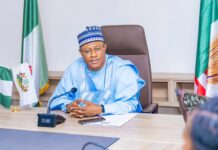
Nigeria’s reform agenda received a major boost as the OECD pledged stronger cooperation with President Bola Tinubu’s administration on investment, trade competitiveness, agriculture, pharmaceuticals, and public finance reforms during talks at the Africa CEO Forum 2026 in Kigali, Rwanda.
President Bola Ahmed Tinubu and senior officials of the Organisation for Economic Co-operation and Development (OECD) have held high-level discussions on strengthening support for Nigeria’s economic reform agenda and improving the country’s investment climate.
The meeting took place on Friday in Kigali on the sidelines of the Africa CEO Forum 2026, where both parties explored areas of cooperation aimed at driving economic transformation in Nigeria.
During the meeting, the OECD pledged to provide robust economic and investment data to support policy planning, boost investor confidence, and aid the implementation of ongoing reforms by the Tinubu administration.
The discussions focused on strategic sectors including public finance, investment facilitation, trade competitiveness, MSME development, agriculture, pharmaceuticals, and solid minerals.
OECD Deputy Secretary-General Frantisek Ruzicka commended the Federal Government’s reform programme, describing the measures as critical steps toward strengthening Nigeria’s economic foundation.
“We support and understand the pillars of your reforms. I think other leaders should learn from you, especially in improving public finances and working conditions. OECD can be partners with you on the ongoing reforms, particularly the priorities,” Ruzicka said.
A major part of the discussions centred on improving investor confidence, tackling negative risk perceptions associated with Africa, and promoting transparency and policy consistency to attract long-term investment capital.
President Tinubu stressed the need for Africa to reshape global perceptions about its investment environment, insisting that accountability and discipline are essential for sustainable economic partnerships.
“Africa’s risk perception must change. Africa must be disciplined and accountable over various projects. We welcome structured cooperation between Nigeria and OECD in support of ongoing reforms in Nigeria,” the President stated.
Tinubu also defended key economic decisions taken by his administration, particularly the removal of fuel subsidies and the unification of the foreign exchange system, describing them as difficult but necessary reforms implemented in the national interest.
“The removal of the subsidy was necessary. There was resistance because easy access is difficult to give up. Even the multiple exchange rates had to go. I have come to serve my people, not to benefit a few,” he said.
The President further highlighted the importance of strengthening value-chain development in sectors such as agriculture and pharmaceuticals, noting that Africa must reduce dependence on raw material exports and develop stronger regional production systems capable of supporting industrialisation and job creation.
The meeting also explored opportunities under the African Continental Free Trade Area framework, particularly in regional trade integration, support for small businesses, and enabling African firms to participate more effectively in global value chains.
Key areas identified for future cooperation include pharmaceuticals, MSMEs and regional industrialisation, agriculture and value-chain development, investment promotion, solid minerals, and tax-to-GDP reforms.
The OECD additionally discussed investment screening mechanisms and structured policy engagement frameworks designed to improve investor decision-making and expand access to financing.
President Tinubu reiterated that transparency, market confidence, and policy stability remain central to Nigeria’s economic strategy, while calling for Africa to shape global economic narratives from a position of competitiveness and confidence.
Visit GMTNewsng for more news stories.