Thursday marks one year since U.S. President Donald Trump ordered the United States’ withdrawal from the World Health Organisation (WHO), a decision that officially takes effect after the completion of the mandatory one-year notice period.
Under the withdrawal agreement, the U.S. was expected to settle all outstanding financial obligations. However, this condition was not fully met, as Washington failed to pay its agreed contributions. Despite this, the WHO lacks the legal mechanism to block the withdrawal or compel payment.
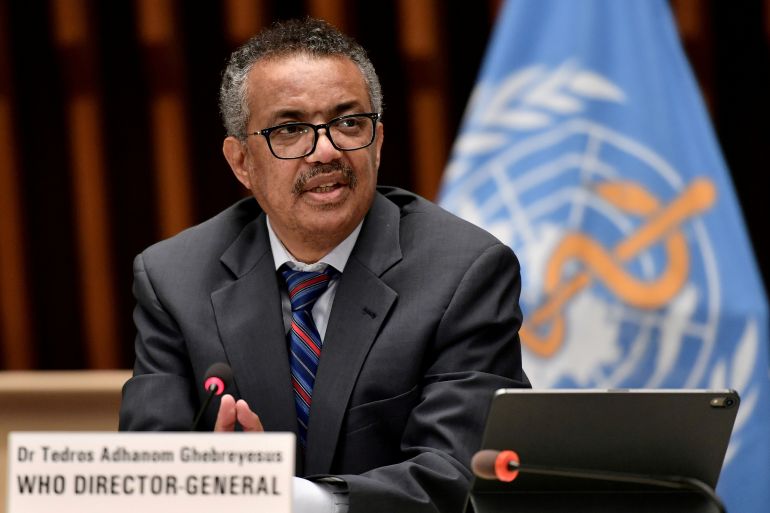
Speaking in Geneva, WHO Director-General, Dr. Tedros Ghebreyesus described the withdrawal as damaging to global health governance.
“I hope that the U.S. will reconsider its decision and rejoin WHO,” Tedros said, stressing that the withdrawal represents a collective loss. According to him, the issue goes beyond funding and strikes at the heart of international cooperation and solidarity.
The WHO plays a central role in global disease surveillance, including early warning systems for dangerous outbreaks and coordination of seasonal influenza vaccine composition based on worldwide pathogen analysis. With the withdrawal now in force, the U.S. no longer participates in these critical processes, depriving the global health system of significant American expertise.
Trump’s dispute with the WHO dates back to the COVID-19 pandemic, during which he accused the agency of mismanaging the crisis and misusing funds. He initially attempted to withdraw the U.S. during his first term, but the move was reversed by his successor, Joe Biden, before the notice period elapsed.
Following Trump’s return to office, the U.S. failed to pay outstanding membership fees for 2024 and 2025, amounting to approximately $280 million. For years, the U.S. had been the WHO’s largest contributor, often providing more than 15 percent of its total budget through voluntary payments.
As a result of the funding shortfall, the WHO has implemented a strict austerity programme. By mid-2026, its workforce is projected to shrink by about 20 percent to roughly 7,300 staff, with the organisation’s budget reduced by a similar margin.
Visit GMTNewsng for more news.