


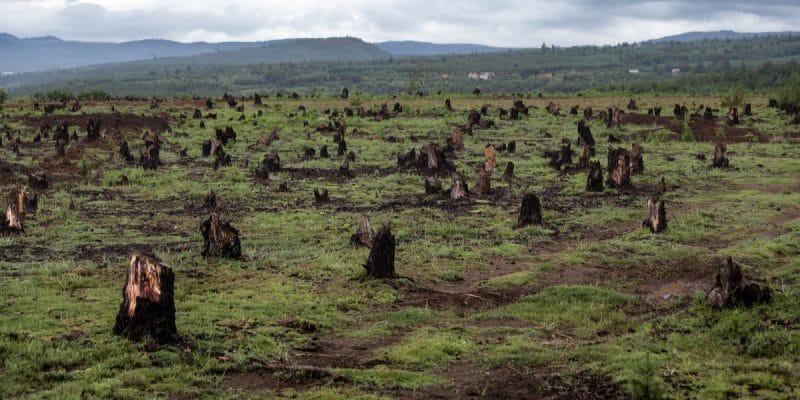
Ivory Coast is facing a catastrophic ecological crisis, losing 200,000 hectares of forest annually to aggressive agricultural expansion and rapid urbanization, officials warn.
The Ivorian Ministry of Water and Forestry has sounded a catastrophic alarm over the state of the nation’s environment, revealing that Ivory Coast is losing an astonishing 200,000 hectares of forest cover annually.
Lieutenant Colonel Kone Joachim, the Assistant to the County Director of the Ministry in the Bouaké Department of the Gbêkê Region, made this grim disclosure on Saturday, June 13, 2026, during a high-level courtesy visit from the Climate Beyond Border Caravane-an environmental advocacy initiative spearheaded by the Planet People Peace Foundation.
Joachim pointedly blamed the devastating depletion on aggressive agricultural expansion and sprawling infrastructure development, warning that human pressure on the country’s fragile woodland ecosystems is projected to escalate dangerously by the year 2030.
He emphasized that rapid urbanization, the uncontrolled establishment of new industrial zones, and the relentless conversion of pristine wilderness into farmlands will inevitably accelerate this destructive trend across the West African nation.
Stressing the global stakes of the crisis, Joachim noted that deforestation accounts for approximately 12 percent of worldwide greenhouse gas emissions, rendering aggressive forest conservation an absolute necessity for meaningful climate action.
In a desperate bid to reverse the ecological decline, the ministry has engineered a radical new policy framework centered squarely on strict forest preservation, large-scale rehabilitation, and aggressive nationwide expansion.
This survival strategy is built upon the pillars of biodiversity conservation, climate stabilization, sustainable socio-economic development, and absolute compliance with Côte d’Ivoire’s international environmental treaties.
The government explained that these restoration efforts will heavily rely on public-private partnerships to secure the vital financing required for implementation, while simultaneously issuing an urgent national appeal for collective citizen awareness to protect ecosystems critical to the country’s future.
Beyond institutional challenges, Joachim expressed deep frustration over rampant forest-related crimes-including illegal sawmilling, wildlife poaching, deliberately set bushfires, and timber trafficking-which actively sabotage the environment and endanger local communities.
In response, CBBC Lead Mr. Olatunji Francisco shared that his pan-African, youth-led foundation has recently partnered with the E LAFI Foundation on a massive tree-planting initiative, pledging cross-border cooperation to directly combat the worsening devastation and push for a green economic transformation across the continent.
Visit GMTNewsng for more news stories.