


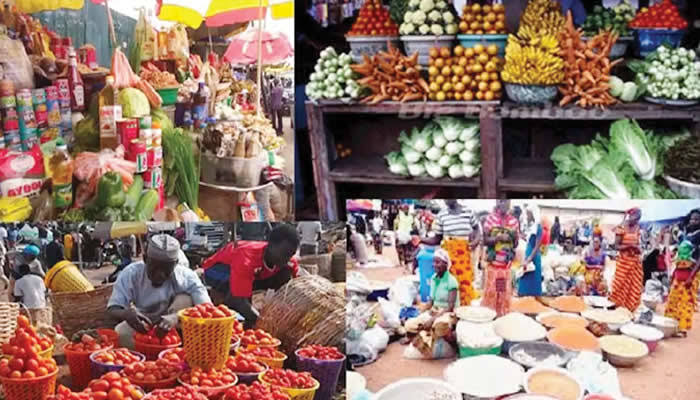
Aggrieved agricultural stakeholders are attributing Nigeria’s heavy reliance on a N2.34 billion food import bill to unchecked rural insecurity, demanding urgent security overhauls to protect critical farmlands.
Local agricultural producers and economic experts are raising a loud alarm over Nigeria’s unsustainable reliance on foreign food supplies.
Stakeholders are pointing directly to the unabated insecurity plaguing agrarian communities as the primary driver behind a massive N2.34 billion ($2.34 billion) food import bill compiled by the Central Bank of Nigeria (CBN) for the 2025 fiscal year.
In separate interviews conducted in Lagos on Sunday, farmers warned that the continuous influx of imported commodities is actively depressing domestic production. They stated that pouring billions of Naira into agricultural intervention budgets will yield sub-optimal results if producers cannot safely access their fields.
The General Secretary of the All Farmers Association of Nigeria (AFAN), Mr. Femi Oke, described the current baseline data as highly discouraging to the local workforce. He insisted that the country possesses the arable land and human capital necessary to grow the vast majority of these commodities domestically.
“As an association, we are not happy about the constant importation of food into the country, especially commodities that can be produced locally. Continuous importation of food that should be grown locally discourages farmers and weakens efforts to achieve food security,” Oke stated.
Adding a structural perspective, agricultural communications specialist Dr. Ismail Olawale argued that achieving sustainable food sovereignty requires a holistic strategy far beyond annual fiscal allocations. Olawale noted that the lack of basic infrastructure, coupled with the systemic vulnerability of rural communities to bandits, has disrupted the entire agrarian value chain.
According to industry metrics, the fear of violent attacks has forced an unprecedented number of rural stakeholders to completely abandon their operations, triggering a mass migration toward overstretched urban centers in search of alternative livelihoods.
Mr. Godwin Egbebe, the National Publicity Secretary of the Poultry Association of Nigeria (PAN), strongly corroborated these findings. He emphasized that the direct correlation between food inflation, high commodity prices, and import dependency stems from the physical displacement of the farming demographic.
The collective block of stakeholders is urgently calling on the Federal Government to deploy robust security networks, establish rural surveillance perimeters, and rehabilitate dilapidated farm-to-market road networks. They maintain that a resilient domestic agricultural sector is the only sustainable shield against global supply shocks and severe domestic exchange-rate pressures.
Visit GMTNewsng for more news stories.