


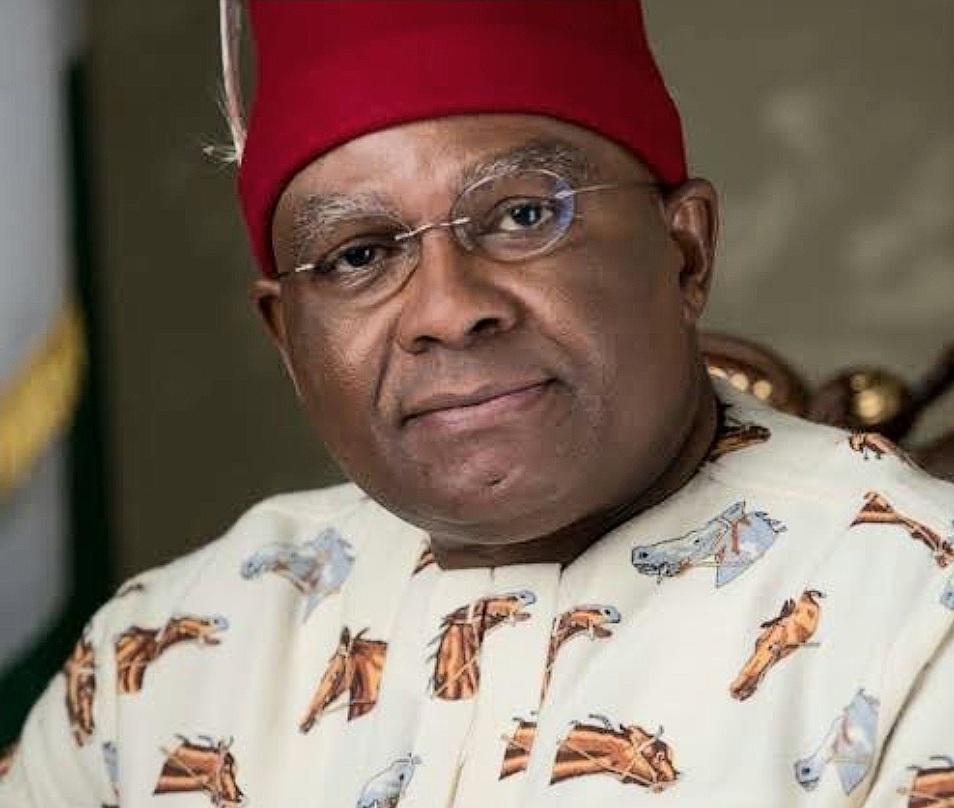
At 66, Chimaroke Nnamani is examined through his Ebeano political structure, PDP governorship era, PDC party experiment, and enduring intellectual influence on Enugu politics.
At 66, Chimaroke Nnamani remains one of the most consequential and persistently debated figures in Enugu State’s political evolution. His relevance is not sustained by nostalgia or office, but by structure—by the systems he built, the networks he shaped, and the political grammar he introduced into governance and power relations in the state.
He is one of those rare political figures whose name refuses to settle into the past tense.
Many politicians hold office. Few reshape the logic of power itself. Fewer still leave behind an organised political ecosystem that continues to echo long after their formal authority has ended.
Chimaroke Nnamani belongs to that smaller category.
The Political Mind Behind the Medical Doctor
Born on May 30, 1960, Nnamani’s early identity as a medical doctor is not incidental to his political persona—it is foundational. Trained in medicine and exposed to advanced clinical and academic environments abroad, he entered politics with a diagnostic mindset: identify systems, locate dysfunction, and redesign outcomes.
This approach would later define both his governance style and his political engineering.
When he assumed office as Governor of Enugu State in 1999, Nigeria was only just returning to civilian rule. Institutions were fragile, political structures were fluid, and state power was still being reassembled after years of military governance.
“Nnamani as a builder of systems (Ebeano),
an institutional operator (PDP),
and an experimenter in political independence (PDC).”
Nnamani did not simply govern within that environment. He reorganised parts of it.
Ebeano: The Political Operating System
The most enduring expression of Chimaroke Nnamani ‘s political philosophy is the Ebeano structure.
Ebeano was not just a campaign slogan or political catchphrase. It evolved into a political operating system—an organised network of influence, loyalty, succession planning, and political coordination that became deeply embedded in Enugu’s democratic culture.
It functioned across electoral cycles, outlived individual offices, and remained relevant through multiple administrations.
Its durability is what sets it apart.
Ebeano created a parallel political logic: one that merged organisation with identity, loyalty with structure, and governance with continuity. It produced office holders, shaped succession battles, influenced party alignments, and established a recognisable political ecosystem within the state.
In practical terms, it became one of the most resilient sub-national political structures in Nigeria’s Fourth Republic.
Governance as System Design
As governor between 1999 and 2007, Nnamani’s administration is often assessed through two lenses: infrastructure development and institutional expansion.
Projects associated with his tenure include major road networks, urban dualisation efforts, educational expansion at the Enugu State University of Science and Technology, the development of its teaching hospital and medical college, judiciary infrastructure upgrades, and the initiation of landmark state facilities including the International Conference Centre and other urban development interventions.
But reducing his governorship to infrastructure alone misses the deeper layer.
His governance style was fundamentally system-oriented. Policy, structure, and long-term institutional alignment often took precedence over short-term political optics. Even his public communication style reflected this orientation, frequently shifting into abstract, theoretical, and intellectual framing rather than populist messaging.
Some interpreted this as brilliance. Others found it distant.
But very few described it as ordinary.
PDP and the Politics of Dual Identity
Within the Peoples Democratic Party (PDP), Chimaroke Nnamani operated in a complex duality.
On one hand, he was part of Nigeria’s dominant post-1999 national ruling structure. On the other, he maintained a strong internal political identity anchored in Ebeano—effectively creating a layered system where national party structure and local political architecture coexisted.
This dual identity allowed Chimaroke Nnamani to remain influential even when formal positions changed. His political relevance was not exclusively tied to office, but to the durability of his underlying structure.

The PDC Experiment: When Structure Seeks Formal Identity
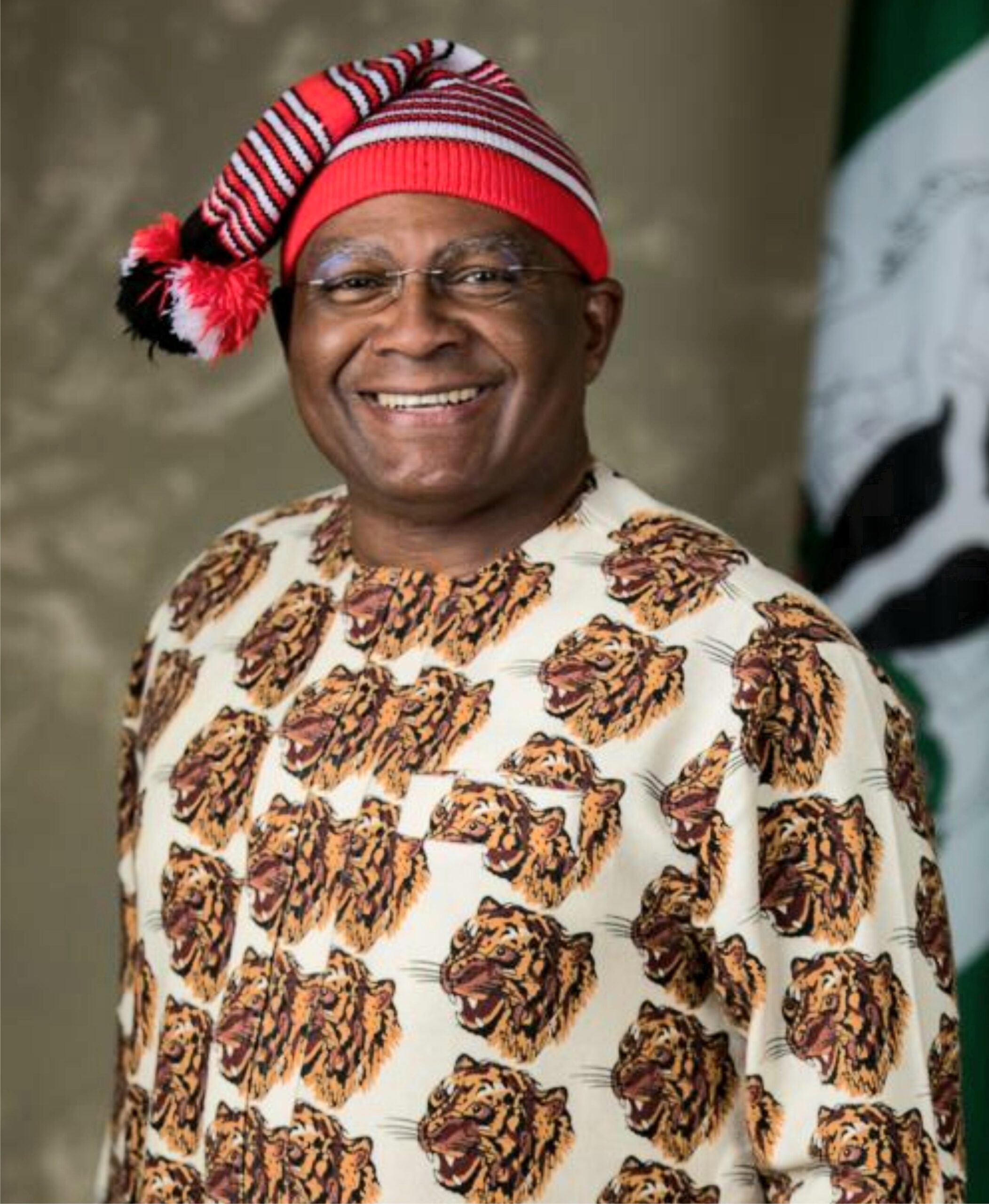
Following his governorship and amid shifting internal political dynamics, Nnamani’s political evolution entered a more experimental phase with the emergence of the People for Democratic Change (PDC).
The PDC, associated with orange symbolism, represented an attempt to formalise political independence outside dominant party structures. It was an effort to convert an already existing political network into a registered political platform capable of contesting power in its own right.
While it did not grow into a dominant national force, its importance lies in what it symbolised.
It represented one of the rare moments in Nigerian politics where a deeply personalised political structure attempted to transition into formal institutional party identity.
In effect, it was Ebeano seeking legal recognition as a standalone political force.
The Senatorial Return: Reintegration Without Reinvention
Nnamani later returned to the Senate, serving between 2007–2011 and again from 2019–2023 as Senator for Enugu East.
His legislative years did not redefine his political identity so much as extend it. Even in the National Assembly, his relevance was often interpreted through the lens of his earlier executive dominance and structural political influence.
Unlike many politicians who reinvent themselves in legislative roles, Nnamani remained largely consistent: a strategist operating within evolving institutional environments.
Controversy, Conflict, and Political Endurance
No long political career is without turbulence, and Nnamani’s trajectory includes significant controversy, legal battles, and political confrontation over time.
Critics have challenged aspects of his governance style and accused him of excessive centralisation of political influence. Supporters, on the other hand, argue that he introduced coherence and strategic direction into a previously fragmented political environment.
What remains indisputable is that his presence altered political dynamics in Enugu State.
Whether viewed positively or critically, he is difficult to remove from any serious account of post-1999 political development in the state.
The Intellectual Signature
Beyond structures and offices lies the defining feature of his political identity: intellectual orientation.
Nnamani’s politics is not purely transactional. It is conceptual. His speeches, decisions, and political strategies often reflect systems thinking, abstraction, and analytical framing.
This intellectual signature places him in a rare category of Nigerian politicians who engage governance not only as administration but as design.
It is also what makes him persistently debated in intellectual and political circles long after formal office.
Chimaroke Nnamani at 66
At 66, Chimaroke Nnamani stands as a political figure who resists final interpretation. His legacy is neither fully consolidated nor easily dismissed. Instead, it exists in tension—between structure and controversy, between intellectual admiration and political disagreement, between institutional design and contested outcomes.
But one fact remains constant.
He altered the trajectory of political organisation in Enugu State.
Ebeano remains part of the political vocabulary. His influence continues to be referenced in discussions of power, succession, and alignment. Even his critics engage with him as a system-builder rather than a passing administrator.
In political history, there are leaders who occupy time.
And there are leaders who reshape structure.
Chimaroke Nnamani belongs firmly in the latter category.
At 66, Chimaroke Nnamani remains not just a former governor or senator, but a continuing argument in Enugu political thought—a reminder that power, when engineered deeply enough, does not end with office.
It evolves into legacy.
And sometimes, into system.
Chimaroke Nnamani at 66: Ebeano, PDP, PDC and the Political Architecture of Enugu
Visit GMTNewsng for more on Chimaroke Nnamani and other news stories.
Ogbodo is Managing Partner, GMTNewsng.com