


The UN says its 2026 Global Humanitarian Overview has secured $8.7 billion in funding and pledges but still requires more than $14 billion to meet urgent humanitarian needs worldwide.
The United Nations Office for the Coordination of Humanitarian Affairs (UN-OCHA) says it has secured 8.7 billion dollars in funding and pledges for its 2026 Global Humanitarian Overview, but more than 14 billion dollars is still required to address urgent humanitarian needs worldwide.
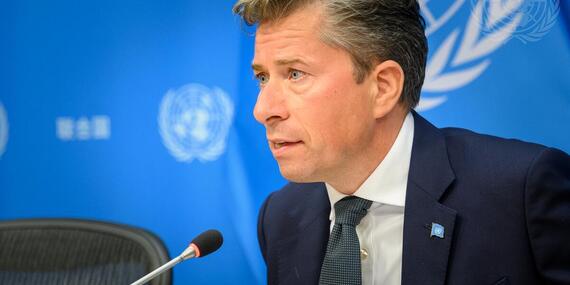
The update was disclosed by Tom Fletcher, Under-Secretary-General for Humanitarian Affairs and Emergency Relief Coordinator, during a news conference on the progress of the humanitarian plan.
Fletcher said the global humanitarian community launched a “hyper-prioritised” appeal of 23 billion dollars more than two months ago to deliver life-saving assistance to 87 million people facing the world’s most severe crises.
According to Fletcher, about 2,000 humanitarian organisations are expected to implement the plan, with more than 60 percent of them being local partners and community-based organisations.
He said the response from donor governments had been encouraging despite growing financial pressures globally.
“We have received extraordinary backing from a significant number of governments for this plan,” Fletcher said.
He explained that the humanitarian community initially received 5 billion dollars, while additional pledges and announcements raised the total funding to 8.7 billion dollars, representing over one-third of the target in the first quarter of the year.
Fletcher acknowledged several major donors that have already contributed to the initiative, including the United States, European Commission, Sweden, Germany, Switzerland, United Kingdom, Canada, Japan, Norway, Denmark, the United Arab Emirates, Belgium, and Qatar.
He noted that some of these partners had indicated that additional contributions may be announced in the coming weeks.
Fletcher said the initial 5 billion dollars included 810 million dollars in unrestricted funding, which he described as the “gold standard” of humanitarian financing because it allows agencies to quickly deploy resources where they are most needed.
He added that humanitarian organisations had already delivered assistance to over seven million people in January alone across 17 operations, including nearly two million people in Sudan, despite security and logistical challenges.
The UN official also said humanitarian agencies were seeking to diversify funding sources beyond governments.
So far, about 60 million dollars has been raised from foundations, corporations and individual donors, part of a broader effort to involve the private sector and civil society in addressing global humanitarian needs.
“Governments alone cannot carry the full financial weight of responding to this global humanitarian crisis,” Fletcher said.
Fletcher urged additional partners to support the humanitarian response and announced plans for a global public campaign to mobilise contributions from businesses, technology companies and the wider public.
He said the humanitarian community also plans to expand digital multipurpose cash assistance programmes, which reduce costs while giving beneficiaries more dignity and choice.
“No one can end every crisis, but together we can help end someone’s crisis one life at a time,” he said.
Visit GMTNewsng for more news stories.