


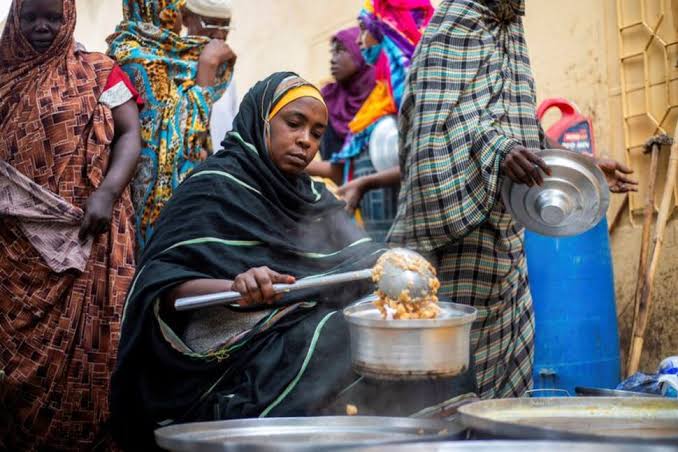
Women are bearing the heaviest burden of Sudan’s escalating humanitarian and hunger crisis, with female-headed households now facing significantly higher levels of food insecurity, the United Nations has warned.
Jens Laerke, spokesperson for the United Nations Office for the Coordination of Humanitarian Affairs (OCHA), told reporters in Geneva on Friday that female-headed households are now three times more likely to be food insecure than male-headed ones.
“Three-quarters of these households report not having enough food to eat,” Laerke said, adding that hunger in Sudan is becoming increasingly gendered.
He explained that long-standing gender inequalities have been sharply worsened by the ongoing conflict, which entered its 1,000th day on Friday.
UN Women has previously warned that women and girls face heightened risks of sexual violence while searching for food and basic necessities in conflict-affected areas.
UN agencies have renewed calls for urgent international intervention to deliver humanitarian assistance to the besieged Darfur city of al-Fashir and Kadugli in southern Sudan, both of which are currently facing famine conditions.
More than 100,000 people are estimated to have fled al-Fashir since the paramilitary Rapid Support Forces (RSF) seized control of the city after an 18-month siege.
OCHA disclosed that Sudan may become the first country to sign an agreement with the United States to access part of the 2 billion dollars in humanitarian assistance pledged in late December.
According to the UN, more than 21 million people across Sudan are currently acutely food insecure, while about 34 million require humanitarian assistance. Children account for nearly half of those in need.
OCHA added that it has yet to confirm further plans for aid access to al-Fashir after international humanitarian staff reached the city for the first time in December since its takeover by the RSF.
Visit GMTNewsng for more news.