


● Ferdy Agu
••• Calls for Regional Integration and Knowledge Sharing
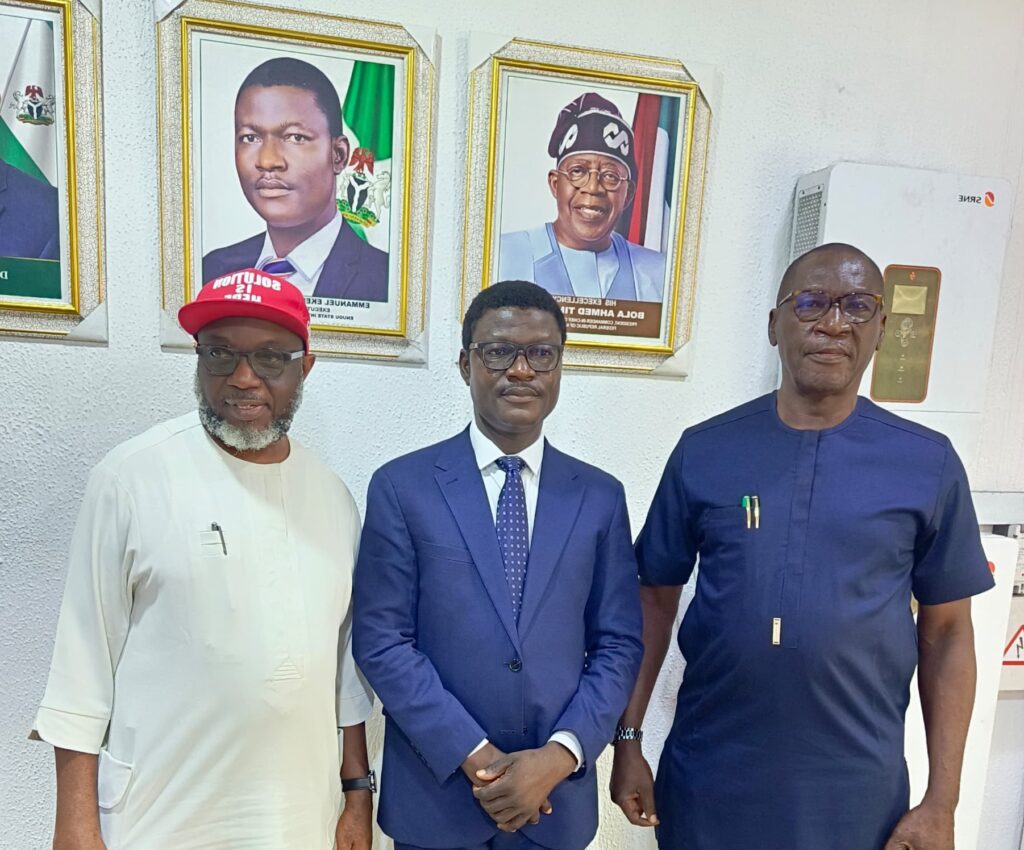
In a move to enhance tax administration across southeastern Nigeria, the Executive Chairman of the Anambra State Internal Revenue Service (ASIRS), Dr. Greg Ezeilo, led a delegation on a courtesy visit to the Enugu State Internal Revenue Service (ESiRS). The purpose of the visit was to exchange ideas on improving revenue generation and explore innovations that can be adopted regionally.
During the visit, Dr. Ezeilo commended the exceptional leadership of the ESiRS Chairman, Emmanuel Ekene Nnamani, for introducing innovative strategies that have transformed tax collection in Enugu State. He lauded Nnamani’s efforts, stating that the operational ease and success of tax administration in Enugu should serve as a model for other states in the region.


“Nnamani’s innovative approach in tax administration has brought about ease and efficiency in Enugu State. This is the reason we have come here—to exchange ideas and see how we can replicate this in Anambra and beyond,” said Dr. Ezeilo. He further emphasized the importance of regional collaboration, noting that, “No one is an island. This visit is part of forming a sub-national integration of southeastern states, including Enugu, Anambra, Ebonyi, Abia and Imo, to enhance our tax systems.”
In his response, the ESiRS Chairman, Emmanuel Ekene Nnamani, expressed his gratitude to the Anambra delegation and highlighted the key factors behind the improvements in Enugu’s revenue collection. He attributed the success to the activation of the informal sector and the integration of E-Ticketing technology, which has streamlined revenue collection and reduced the burden on taxpayers.
“Our adoption of E-Ticketing has not only improved revenue collection but has also made tax payments more convenient for the people. This technology eliminates inefficiencies and ensures transparency,” Nnamani explained. He encouraged his Anambra counterpart to consider similar innovations, adding that such efforts would help meet the state’s financial obligations.
The Executive Director of Assessment at ASIRS, Ben Okafor, also praised Nnamani for his leadership and forward-thinking initiatives. “This visit has been immensely beneficial. We’ve learned a lot about areas we need to improve and where we are falling short. The achievements of Enugu’s Internal Revenue Service are indeed worthy of emulation,” said Okafor. He emphasized the importance of such exchanges in fostering mutual growth between the two agencies.
Nnamani further underscored the impact of Governor Peter Mbah’s developmental strides, which have contributed to a more cooperative tax environment. He pointed to notable projects, including infrastructure development and improvements in healthcare, which have encouraged citizens to be more willing to pay taxes. “The visible progress in Enugu State under Governor Mbah has strengthened our efforts in tax collection. People see where their money is going, and that makes a significant difference,” Nnamani noted.


Nnamani made reference to provisions of the Personal Income Tax Act (PITA) as amended, which empowers state governments to collect taxes from individuals, including those in the informal sector. He explained that without tax revenue, State development is not sustainable.
Dr. Ezeilo, in his closing remarks, echoed Nnamani’s sentiment, stressing that tax compliance is essential for sustainable development. He also expressed hope that the collaboration between the two states would lead to further innovations in tax collection across the southeastern region.

“This exchange has given us valuable insights. We will go back to Anambra and see how we can implement some of the strategies we’ve seen here. Taxation is the backbone of development, and it is important that taxpayers understand and appreciate the role they play in building our state,” Dr. Ezeilo stated.
As the meeting concluded, both parties agreed to continue collaborating to strengthen revenue generation and tax administration in their respective states. They expressed optimism that with sustained efforts and regional cooperation, southeastern Nigeria could set a new standard in efficient and transparent tax systems. GMTNewsng